Understanding Sapphire Heat Treatment
Sapphire heat treatment is defined as the process of heating gem-quality corundum to temperatures between 800°C and 1800°C to permanently improve its color, clarity, or both. It is the most common enhancement applied to sapphires and is considered a standard, accepted practice throughout the international gemstone trade when properly disclosed.
For B2B buyers, understanding heat treatment is not optional — it is foundational. Treatment status affects pricing by 30-100%, influences how you disclose to your customers, and determines which laboratory reports you need. This guide covers the science, the commercial implications, and the practical verification steps every wholesale buyer should know.
At Lim Gems Factory, we have processed sapphires through our Bangkok cutting facility for over thirty-five years and work with both heated and unheated material daily. This guide reflects what we have learned from both the cutting bench and the trading desk. For a background on how origin affects treatment response, see our comparison of Ceylon vs Thai sapphires.
The Science of Sapphire Heat Treatment
Why Heat Treatment Works
Sapphire color is produced by trace elements — primarily iron, titanium, and chromium — within the corundum crystal lattice. In their natural state, these elements may not be in their optimal configuration for producing the most attractive color. Heat treatment modifies the arrangement and interaction of these trace elements at the atomic level.
The key mechanisms include:
Dissolution of rutile silk: Fine rutile (TiO2) needle inclusions are common in natural sapphires. When heated, the titanium in the rutile dissolves back into the corundum lattice, where it interacts with iron to intensify the blue color through Fe2+/Ti4+ intervalence charge transfer. This simultaneously improves clarity (by removing the silk) and enhances color.
Oxidation state changes: Heat treatment in oxidizing or reducing atmospheres can change the valence states of iron and other transition metals. For example, heating in a reducing atmosphere promotes Fe2+ formation, which is essential for the blue-producing charge transfer mechanism.
Fracture healing: Natural fractures within the stone can partially heal during heating, improving transparency. If a flux (typically borax) is used during treatment, it can fill fractures and create a glassy residue — this is considered a more significant treatment than simple heating.
Exsolution and diffusion: At high temperatures, trace elements can migrate within the crystal, evening out color zoning and producing more uniform color distribution.
| Temperature Range | 800-1800°C depending on material and desired effect |
| Duration | Hours to weeks; typical commercial treatment runs 2-7 days |
| Atmosphere | Oxidizing (air), reducing (hydrogen/CO), or neutral (nitrogen/argon) |
| Additives | None (standard) or flux/borax (flux-healing) — distinction matters for disclosure |
| Equipment | Electric muffle furnaces with precise temperature control and atmosphere regulation |
| Success Rate | 60-80% of rough shows meaningful improvement; 20-40% shows no significant change |
Types of Heat Treatment
Not all heat treatment is equal. The gemstone trade recognizes a hierarchy of treatment types, each with different disclosure requirements and price implications.
1. Standard Heat Treatment (No Additives)
This is the most common and most widely accepted form. The sapphire is heated to high temperatures without any chemical additives. Changes are produced solely by reorganizing the trace elements already present in the stone.
- Trade acceptance: Fully accepted at all market levels
- Disclosure: Must be disclosed as "heated" (H) on laboratory reports
- Price impact: Heated stones trade at standard market prices; unheated stones carry the premium
- Stability: All changes are permanent and completely stable
2. Flux-Healed Treatment
During heating, a borax-based flux is applied to the stone. At high temperatures, the flux melts and can penetrate surface-reaching fractures, partially healing them with a glassy borax residue. This produces an improvement in apparent clarity.
- Trade acceptance: Accepted with full disclosure, but valued lower than standard heat treatment
- Disclosure: Must be disclosed as "heated with residues" or "flux-healed" — look for notations like H(a), H(b), or H(Be) on lab reports depending on the amount of residue
- Price impact: 10-30% discount compared to standard-heated material of equivalent appearance
- Stability: Generally stable, but borax residues can be affected by re-heating during jewelry repair
3. Beryllium Lattice Diffusion
A more controversial treatment where sapphires are heated in the presence of beryllium (typically added as chrysoberyl powder). The beryllium atoms diffuse into the crystal lattice and create colors that were not present in the original stone — notably padparadscha-like pinks and oranges from near-colorless material, and vivid yellows from pale stones.
- Trade acceptance: Accepted only with explicit disclosure; many high-end dealers refuse to stock Be-diffused material
- Disclosure: Must be disclosed as "beryllium-diffused" or "lattice diffusion treated" — major laboratories flag this prominently
- Price impact: 70-95% discount compared to natural-colored or standard-heated equivalents
- Stability: Permanent — the beryllium is integrated into the crystal lattice
4. Titanium Surface Diffusion
An older treatment where titanium is diffused into the surface layer of a sapphire to create or enhance blue color. The color penetration is typically shallow (less than 0.5mm), meaning re-cutting or chipping can expose untreated material beneath.
- Trade acceptance: Low — largely replaced by beryllium diffusion in modern trade
- Disclosure: Must be disclosed; largely considered unacceptable in anything above fashion jewelry
- Price impact: Very low value compared to natural-colored material
- Stability: Permanent but superficial — vulnerable to re-cutting
5. Glass Filling (Lead Glass, Cobalt Glass)
The most significant treatment involves filling fractures and cavities with lead-based or cobalt-based glass. This dramatically improves apparent clarity and can add or modify color. It is primarily applied to heavily included, low-grade material.
- Trade acceptance: Controversial — many segments of the trade refuse glass-filled material entirely
- Disclosure: Mandatory; selling glass-filled sapphires as "natural" is considered fraud
- Price impact: Glass-filled sapphires are priced at a fraction of untreated material — often 95%+ discount
- Stability: Poor — the glass fill can deteriorate with exposure to heat, acid, and even some household chemicals
Price ranges are approximate and relative to equivalent untreated material. Standard-heated stones are the market baseline for most transactions.
| Treatment Type | Acceptance Level | Price vs Untreated | Disclosure Requirement |
|---|---|---|---|
| Standard heat (no additives) | Fully accepted | 70-100% (baseline) | Required: 'Heated' or 'H' |
| Flux-healed | Accepted with disclosure | 50-70% | Required: 'Heated with residues' |
| Beryllium diffusion | Conditional acceptance | 5-30% | Required: 'Be-diffused' or 'Lattice diffusion' |
| Titanium surface diffusion | Low acceptance | 5-20% | Required: 'Surface diffusion' |
| Glass filling | Minimal acceptance | 2-10% | Required: 'Glass-filled' — non-disclosure is fraud |
Detection: How Laboratories Identify Treatment
Understanding what laboratories look for helps buyers evaluate stones before submitting them for formal testing.
Visual and Microscopic Indicators
Experienced gemologists can identify many treatment indicators through standard microscopic examination:
Altered silk: In unheated sapphires, rutile silk appears as crisp, well-defined needles. Heat treatment partially or fully dissolves these needles, leaving behind "dotted" or "broken" silk patterns — interrupted lines of tiny dots where complete needles once existed. Fully dissolved silk leaves no visible trace but changes the stone's internal light scattering.
Expanded crystal inclusions: Solid mineral inclusions (such as zircon, apatite, or calcite) expand at different rates than the corundum host during heating. This creates stress halos — radial fractures or disc-shaped tension cracks around crystal inclusions. These "heat haloes" are among the most reliable microscopic indicators of treatment.
Surface features: High-temperature treatment can produce surface pitting, re-crystallization textures, and flux residues at the stone's surface. These are visible under magnification, particularly around the girdle and pavilion facets.
Altered fingerprints: Natural fingerprint inclusions (healed fracture planes) show a characteristic pattern of fluid-filled tubes. Heat treatment can modify these, creating partially healed fractures with distinctive textures.
Advanced Analytical Techniques
For definitive treatment determination, laboratories employ advanced instrumentation:
FTIR Spectroscopy (Fourier Transform Infrared): Detects changes in OH-group concentrations within the corundum lattice. Heat treatment at high temperatures typically reduces hydroxyl content, producing a characteristic spectral signature.
UV-Vis Spectroscopy: Measures the stone's absorption spectrum across ultraviolet and visible wavelengths. Certain absorption features are modified or eliminated by heat treatment, providing evidence of thermal alteration.
LA-ICP-MS (Laser Ablation Inductively Coupled Plasma Mass Spectrometry): Measures trace element concentrations with extreme precision. This technique can detect beryllium at parts-per-million levels, which is essential for identifying Be diffusion treatment. It also provides the trace element profile used for origin determination.
LIBS (Laser Induced Breakdown Spectroscopy): A rapid screening technique for beryllium detection, used by some laboratories as a first-pass test before more detailed analysis.
Photoluminescence Spectroscopy: Detects changes in chromium and vanadium emission peaks that correlate with heat treatment.
The Unheated Premium: Understanding Market Dynamics
Why Unheated Commands Higher Prices
Unheated sapphires of fine quality are rare. When a natural crystal emerges from the earth with attractive color, good clarity, and sufficient size — all without the intervention of heat — it represents an exceptional geological event. This rarity drives the premium.
The premium also reflects consumer psychology: many high-end buyers prefer "natural" stones that owe their beauty entirely to nature. In the collector market, unheated status combined with prestigious origin (Kashmir, Burma, Ceylon) creates exponential value. Our guide to buying unheated sapphires and rubies covers how that premium works and how to verify it.
Unheated Premiums by Origin and Quality
Premiums are approximate and fluctuate with market conditions. Calculated against equivalent heated material.
| Origin | Quality Level | Unheated Premium | Notes |
|---|---|---|---|
| Kashmir | Fine (AAA) | 200-500%+ | Collector/museum level; transactions are rare |
| Burma (Myanmar) | Fine (AAA-AA) | 80-150% | Strong demand from Asian markets |
| Ceylon (Sri Lanka) | Fine (AAA-AA) | 50-100% | Broadest market demand; most liquid |
| Ceylon | Commercial (A) | 25-40% | Premium narrows at commercial grades |
| Madagascar | Fine (AAA-AA) | 30-60% | Growing recognition; premiums increasing |
| Thailand | Fine (AA) | 20-30% | Limited unheated premium due to natural dark color |
| Any origin | Low grade (B) | 5-15% | Minimal premium at low quality levels |
When to Buy Heated vs Unheated
For B2B buyers, the heated/unheated decision is fundamentally a return-on-investment calculation:
Buy heated when:
- Producing commercial jewelry where treatment status is not a selling point
- Cost optimization is critical to your product's market position
- You need large quantities with consistent quality — heated parcels are easier to source in volume
- Your customer base does not inquire about or value treatment status
Buy unheated when:
- Serving the fine jewelry or collector market where unheated status is a key selling point
- The retail markup is sufficient to absorb the wholesale premium and still deliver margin
- You can verify unheated status through reputable laboratory certification
- Your branding emphasizes natural, untreated gemstones
For a comparison of how different origins respond to heat treatment, see our Ceylon vs Thai sapphire origin guide. Understanding the treatment hierarchy also directly affects how you read a gemstone lab report — the treatment code on a certificate is one of the most important figures on the page.
Disclosure Requirements: What the Law and Trade Expect
Industry Standards
The international gemstone trade has clear expectations for treatment disclosure:
- CIBJO (The World Jewellery Confederation): Requires disclosure of all treatments. Standard heat treatment must be disclosed verbally or in documentation. More significant treatments (flux healing, diffusion, filling) require disclosure at every point of sale.
- FTC (US Federal Trade Commission): Requires disclosure of any treatment that affects the value of a gemstone or is not permanent. Heat treatment must be disclosed.
- LMHC (Laboratory Manual Harmonisation Committee): Standardizes treatment nomenclature across major laboratories, ensuring consistent reporting.
Practical Disclosure for B2B
At the wholesale level, treatment disclosure should flow through every transaction:
- Invoices: State treatment status (H for heated, N for no indication of heat, H(a) for heated with minor residues, etc.)
- Lot documentation: Specify whether the lot is all heated, all unheated, or mixed
- Laboratory reports: For individual stones above 1 carat, provide laboratory reports specifying treatment status
- Verbal communication: Confirm treatment status when discussing specifications with buyers
Non-disclosure of known treatment is both unethical and commercially dangerous. A B2B buyer who discovers undisclosed treatment will never return, and in serious cases, non-disclosure can constitute fraud.
How to Evaluate a Supplier's Treatment Transparency
When sourcing from a new supplier, assess their treatment practices carefully:
Green Flags
- Voluntarily discloses treatment status without being asked
- Uses standardized treatment codes on all documentation
- Can explain what type of treatment was applied (not just "heated")
- Offers laboratory certification for higher-value stones
- Maintains separate inventory for heated and unheated material
- Welcomes questions about treatment and sourcing practices
Red Flags
- Avoids direct answers about treatment status
- Labels stones as "natural" without specifying treatment status (natural origin and no-heat treatment are separate claims)
- Offers unheated stones at prices suspiciously close to heated market rates
- Cannot provide laboratory reports for claimed unheated stones above 2 carats
- Mixes treated and untreated material in the same lots
- Becomes defensive when asked about treatment details
The Treatment Decision: A Bangkok Cutter's Perspective
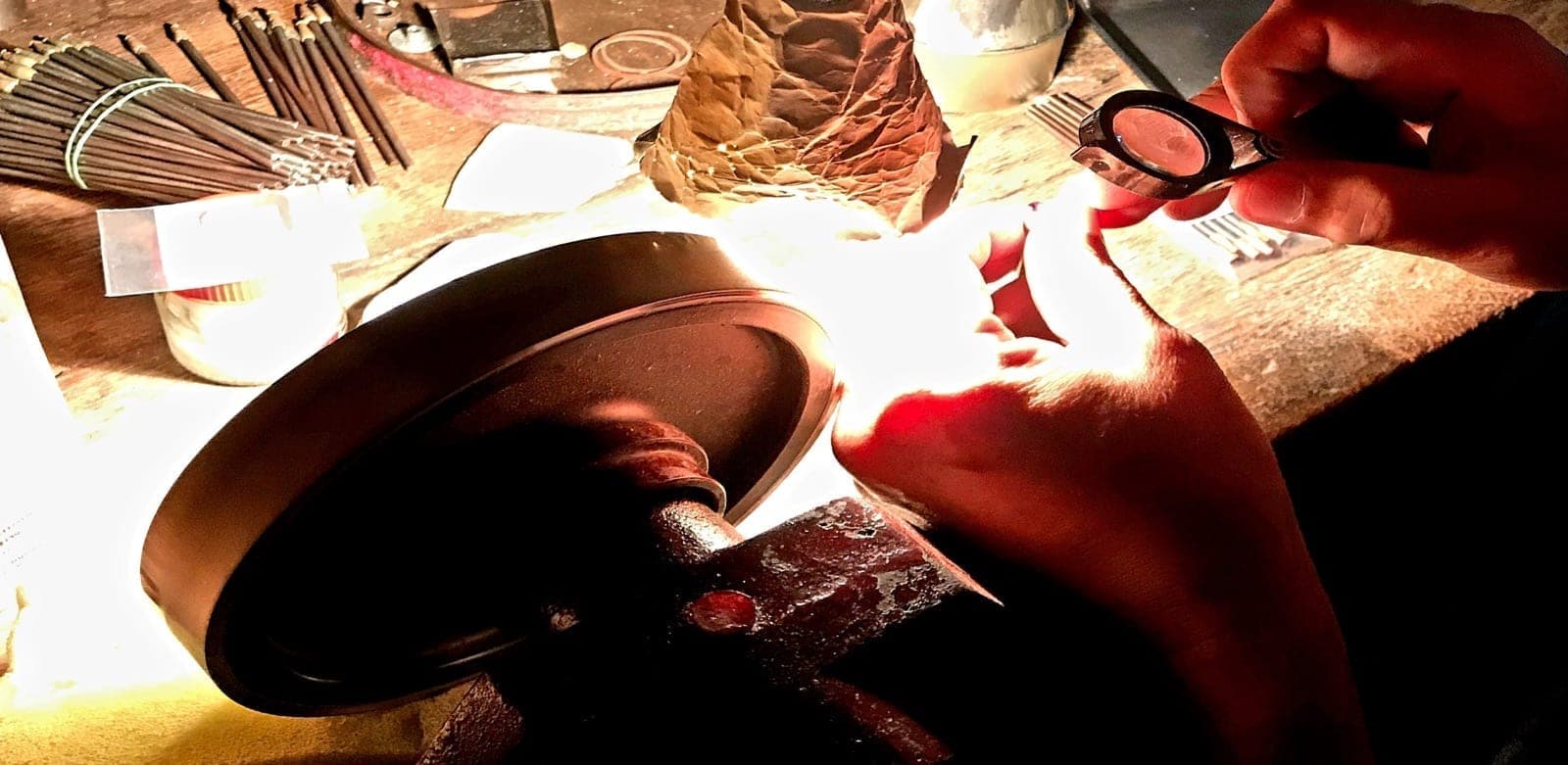
As cutters, we evaluate every piece of rough twice: once for its current state, and once for its potential after treatment. Not every stone benefits from heating. Some of the finest sapphires we have ever handled were beautiful in their natural state and would have gained nothing — or even lost quality — from treatment.
The decision to treat is driven by economics. If a stone's value increases sufficiently after treatment to justify the cost and risk (yes, treatment can occasionally damage stones), it makes commercial sense. If the stone is already attractive or if it is destined for the unheated market where the premium exceeds the potential color improvement, we recommend leaving it unheated.
For wholesale buyers, this means:
- Unheated lots require more careful inspection because quality variation is wider — you are working with whatever nature produced, without the equalizing effect of treatment
- Heated lots offer more predictable quality and easier matching across large orders
- Mixed lots should be avoided unless priced and documented accordingly
Frequently Asked Questions for Wholesale Buyers
Can a heated sapphire be re-treated?
Technically yes, but rarely beneficial. If the first round of treatment did not achieve satisfactory results, a second heating rarely produces meaningful improvement. Re-treatment also increases the risk of damage and further alters inclusion features, which can make laboratory analysis more difficult.
Does heat treatment affect durability?
Standard heat treatment does not affect sapphire's durability. Corundum maintains its 9 Mohs hardness and crystal integrity through the treatment process. However, stones that were heavily fractured before treatment may have reduced durability if the fractures were only partially healed with flux residue.
How should I store heated vs unheated sapphires?
Storage requirements are identical — treatment status does not affect stability under normal conditions. However, glass-filled sapphires should be stored separately and handled with care, as they are more vulnerable to chemical exposure and thermal shock during jewelry manufacturing processes.
Summary
Heat treatment is a fundamental reality of the sapphire trade that every B2B buyer must understand. The key principles are straightforward: standard heat treatment is accepted and should be disclosed; more significant treatments require explicit disclosure and carry substantial price discounts; and unheated stones command premiums that scale with quality and origin prestige.
By understanding treatment science, detection methods, and market dynamics, wholesale buyers can source confidently and build transparent relationships with both suppliers and customers. If you need a supplier who maintains rigorous treatment documentation at every stage, reach out to our team — treatment transparency is a non-negotiable part of how we operate.
For more on sapphire quality evaluation, explore our sapphire buying guide and browse available inventory on our sapphire collection page.