Why Origin Matters in the Ruby Trade
In the wholesale ruby market, geographic origin is one of the most significant pricing factors after color, clarity, and size. For decades, Myanmar's Mogok Valley set the standard for the world's finest rubies. Today, Mozambique — specifically the Montepuez mining region — has emerged as a major source of gem-quality material that challenges traditional hierarchies.
For B2B buyers sourcing our wholesale ruby collection for jewelry manufacturing, retail inventory, or collection pieces, understanding the real differences between these two origins is essential to making smart purchasing decisions. This guide draws on our direct experience trading both origins through our Bangkok factory and cutting operations.
Geographic and Geological Background
Myanmar (Burma) has produced rubies for over 800 years, primarily from the Mogok Stone Tract in Mandalay Region. The rubies form in marble-hosted deposits — metamorphic environments where aluminum-rich limestone recrystallizes under heat and pressure. This geological context is critical because marble-hosted rubies tend to have low iron content, which directly affects their optical properties.
A ruby is defined as a gem-quality variety of the mineral corundum (aluminum oxide, Al2O3) colored red by trace amounts of chromium. The distinction between ruby and pink sapphire is debated, but the trade generally requires a dominant red hue for the ruby designation.
Mozambique entered the global ruby market dramatically in 2009 when significant deposits were discovered near Montepuez in Cabo Delgado province. These rubies form in amphibolite-hosted deposits — a different geological environment that produces stones with distinct trace element profiles, particularly higher iron content than typical Burmese material.
Color Comparison
Color is the single most important value factor in rubies, and this is where the Burmese vs. Mozambique debate gets nuanced.
Burmese Color Profile
The classic Mogok ruby exhibits a pure red hue with minimal secondary colors, medium to medium-dark tone, and vivid saturation. The low iron content allows strong red fluorescence under ultraviolet light, creating what dealers describe as an "inner glow" — the stone appears to radiate color from within, particularly in daylight. The finest examples earn the coveted pigeon blood designation. For a deep dive into how color and clarity interact to determine overall value, the grading section of our ruby buying guide covers the full framework.
Mozambique Color Profile
Top Mozambique rubies achieve comparable saturation and hue purity, but with subtle differences. The higher iron content means slightly less fluorescence in many stones, which can make the color appear marginally less "lively" under certain lighting. However, the best Mozambique material — particularly stones that have been heated to optimize color — can be virtually indistinguishable from fine Burmese rubies to the naked eye.
| Factor | Burmese (Mogok) | Mozambique (Montepuez) |
|---|---|---|
| Typical Hue | Pure red, trace blue secondary | Red, occasional slight orange or purple modifier |
| Saturation Range | Medium-strong to vivid | Medium to vivid |
| Fluorescence | Strong to very strong (low Fe) | Moderate to strong (higher Fe) |
| Silk Inclusions | Fine rutile silk, often attractive | Variable; can be coarser |
| Typical Clarity | Eye-clean common in fine goods | Eye-clean available; more included material in production |
| Heat Treatment | Unheated premium goods available | Most commercial material heated |
| Market Premium | Baseline + 20-50% origin premium | Baseline (no origin premium) |
Clarity and Inclusions
Both origins produce material across the full clarity spectrum, but their inclusion signatures differ in ways that matter to dealers and gemologists.
Burmese rubies characteristically contain fine rutile silk — microscopic needle-like inclusions of rutile (titanium dioxide) that, when present in the right density and orientation, create a soft, velvety appearance that is actually prized by connoisseurs. Additional typical inclusions include calcite crystals, apatite, and short rutile needles. The finest Mogok rubies are eye-clean while retaining enough silk to produce that desirable "sleepy" quality.
Mozambique rubies tend to contain amphibole inclusions, iron-stained fractures, and crystal inclusions of various minerals associated with their host rock. In commercial-grade material, these inclusions can be more visually apparent than those in comparable Burmese stones. However, top-quality Mozambique rubies — particularly after careful heating — offer excellent clarity that meets the standards of the most demanding buyers.
Treatment Considerations
Treatment status significantly affects pricing for both origins, but the market dynamics differ.
Burmese Rubies and Treatment
The most valuable segment of the Burmese ruby market is unheated material. A fine unheated Mogok ruby with pigeon blood color commands the highest per-carat prices in the entire colored stone market. Heated Burmese rubies are also widely traded and respected — the key is transparency in disclosure.
Mozambique Rubies and Treatment
The majority of Mozambique rubies entering the market have been heat-treated to improve color and clarity. Low-temperature heating (around 900-1100 degrees C) is common and widely accepted in the trade. Some Mozambique rubies receive glass filling or lead-glass treatment to fill fractures — these treatments are considered less stable and must be clearly disclosed, as they significantly reduce value.
A growing segment of unheated Mozambique rubies is entering the market, and these stones are gaining recognition among knowledgeable buyers. Unheated Mozambique rubies with fine color offer exceptional value relative to their Burmese counterparts.
Wholesale Pricing Dynamics
Understanding the pricing relationship between these two origins is critical for profitable sourcing.
The origin premium: At equivalent quality grades, Burmese rubies typically command a 20-50% premium over Mozambique material. For exceptional pigeon blood stones above 3 carats, the premium can exceed 100%. This premium is driven by:
- Historical prestige and collector demand
- Genuinely superior fluorescence characteristics in the best material
- Increasingly constrained supply from Myanmar due to political instability and mining regulation
- Market inertia — many end consumers and retailers still associate "Burmese" with "best"
The value opportunity: For B2B buyers serving markets where origin is secondary to visual quality and price, Mozambique rubies represent a significant value proposition. A fine heated Mozambique ruby offers comparable beauty at 30-50% less than an equivalent Burmese stone.
| 1-2 ct Fine (heated) | Burma: $3,000-8,000/ct | Mozambique: $1,500-5,000/ct |
| 1-2 ct Fine (unheated) | Burma: $5,000-15,000/ct | Mozambique: $3,000-8,000/ct |
| 3-5 ct Fine (heated) | Burma: $8,000-25,000/ct | Mozambique: $4,000-12,000/ct |
| 3-5 ct Pigeon Blood | Burma: $20,000-80,000+/ct | Mozambique: $10,000-35,000/ct |
| Calibrated melee (<1 ct) | Origin premium minimal; priced primarily on color and clarity |
Note: Prices are approximate wholesale ranges and vary with market conditions, individual stone quality, and certification. For a broader look at how these figures fit into the full ruby price spectrum, see our ruby price per carat guide.
Sourcing Strategy for B2B Buyers
Our recommendation depends on your target market:
For high-end retail and collectors: Burmese rubies — particularly unheated material with GRS or Gubelin certification — remain the gold standard. The origin story adds marketing value that justifies the premium.
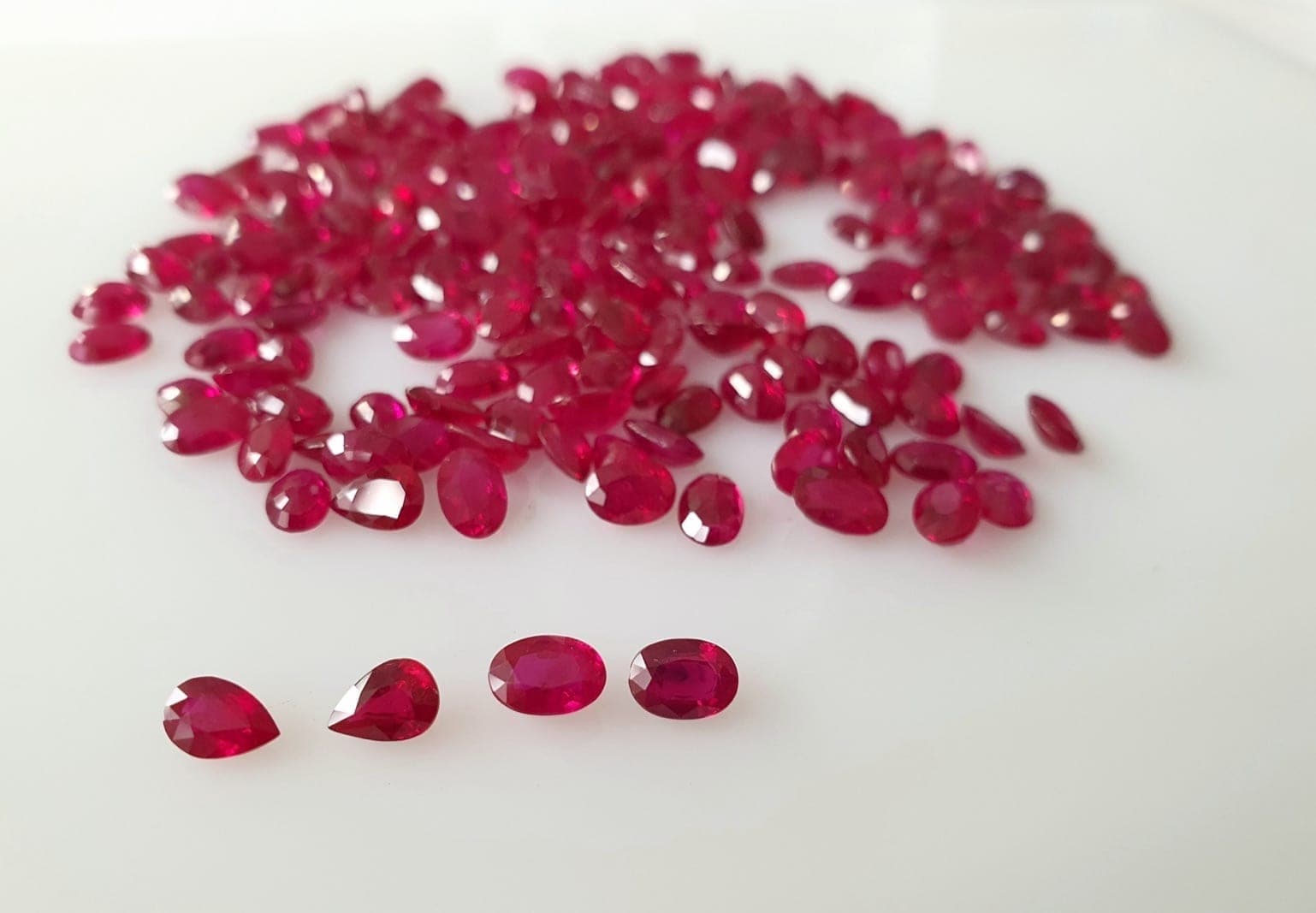
For mid-range jewelry manufacturing: Mozambique rubies offer the best balance of quality and cost. Heated Mozambique material in calibrated sizes provides consistent color and availability that production schedules require.
For investment-grade pieces: Both origins have appreciation potential, but unheated Burmese rubies above 3 carats with pigeon blood certification have the strongest historical price performance.
For emerging markets: Where consumer education about ruby origins is still developing, Mozambique rubies allow you to offer genuine, certified gemstones at accessible price points without compromising on beauty.
The Market Is Evolving
Ten years ago, the Burmese vs. Mozambique question had a clearer answer for most buyers. Today, the gap has narrowed significantly. Mozambique's mining operations have matured, cutting and treatment techniques have improved, and market acceptance has grown. Meanwhile, Burmese supply constraints have pushed prices upward, making the value case for Mozambique material increasingly compelling.
The most successful dealers we work with maintain inventory from both origins, matching stone origin to client needs and market positioning rather than defaulting to one source.
Whether you need certified Burmese pigeon blood rubies for flagship pieces or consistent Mozambique calibrated goods for production, browse our ruby inventory or contact our sourcing team directly. To protect your business from misrepresented material in both origins, our guide on how to spot synthetic rubies covers the key detection techniques.