Understanding Ruby Pricing for Wholesale Buyers
At wholesale, ruby prices range from roughly $100–500 per carat for commercial-grade material, to $1,000–10,000 per carat for fine quality, up to $50,000–100,000+ per carat for exceptional unheated Burmese pigeon-blood rubies above 3 carats — one of the widest price spans of any gemstone.
Ruby pricing is among the most complex in the colored gemstone trade. Unlike diamonds, where standardized grading and transparent price lists (Rapaport) provide clear benchmarks, ruby pricing requires evaluating multiple variables simultaneously — color, clarity, origin, treatment, size, and cut — without a universally accepted price list.
This guide provides B2B buyers with a practical framework for understanding and evaluating ruby prices per carat across the quality spectrum. The pricing data reflects current wholesale market conditions as observed through our Bangkok trading operations, with direct sourcing from major origins. For the color and clarity grading that underpins these prices — and the end-to-end sourcing process — see our ruby buying guide.
The Key Factors That Drive Ruby Price Per Carat
Before examining specific price ranges, it is essential to understand the hierarchy of factors that determine ruby pricing:
| Color (50-70%) | The dominant factor. Vivid, saturated red with pure hue commands the highest prices. Even small differences in saturation can create 2-3x price differences. |
| Origin (10-20%) | Burmese rubies carry a 20-50% premium over comparable Mozambique material. Thai and other origins trade at varying discounts. |
| Treatment (10-20%) | Unheated commands 30-100% premium over heated. Glass-filled rubies trade at 80-95% discount to untreated. |
| Clarity (10-15%) | Eye-clean is the benchmark. VVS-VS clarity adds premium; visible inclusions reduce value but less dramatically than in diamonds. |
| Size (multiplier) | Per-carat prices increase exponentially at size thresholds: 1ct, 2ct, 3ct, 5ct, 10ct. |
| Cut Quality (5-10%) | Well-proportioned cuts that maximize color and minimize windowing command modest premiums. |
Price Ranges by Quality Tier
The following price ranges represent wholesale (dealer-to-dealer) prices for loose rubies. Retail prices are typically 2-4x higher, depending on the market and markup structure.
Commercial Grade
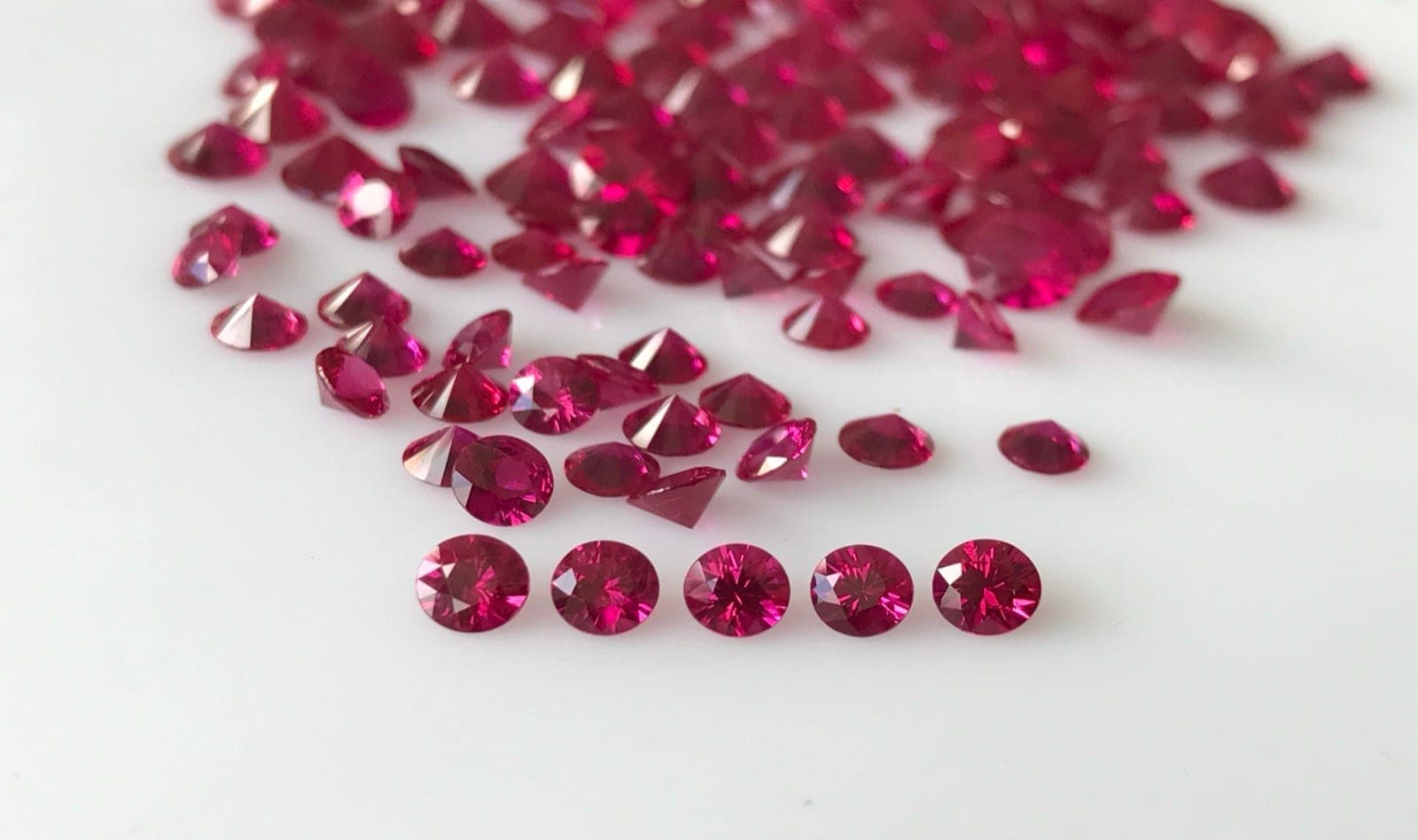
Commercial-grade rubies form the bulk of the market by volume. These stones have acceptable red color but with noticeable secondary hues (purple, orange, or brown modifiers), moderate saturation, and visible inclusions. They are widely used in mass-market jewelry, silver jewelry, and fashion pieces.
| Size Range | Heated Commercial | Unheated Commercial | Notes |
|---|---|---|---|
| Melee (< 0.5 ct) | $50-200/ct | $100-400/ct | Sold in calibrated lots; priced per lot or per carat |
| 0.5 - 1.0 ct | $100-500/ct | $200-800/ct | Calibrated rounds and ovals most demanded |
| 1.0 - 2.0 ct | $200-800/ct | $400-1,500/ct | Individual stone pricing begins here |
| 2.0 - 3.0 ct | $300-1,200/ct | $600-2,000/ct | Fewer available; quality sorting more important |
| 3.0+ ct | $500-2,000/ct | $1,000-3,500/ct | Individual negotiation; lab reports recommended |
Fine Grade
Fine-grade rubies exhibit strong to vivid saturation with a predominantly red hue and only minor secondary colors. They are eye-clean or have only minor inclusions visible under magnification. This is the quality that upscale jewelry manufacturers and retailers seek.
| Size Range | Heated Fine (Mozambique) | Heated Fine (Burma) | Unheated Fine | Notes |
|---|---|---|---|---|
| 0.5 - 1.0 ct | $800-2,500/ct | $1,200-4,000/ct | $2,000-6,000/ct | Strong demand for calibrated pairs and sets |
| 1.0 - 2.0 ct | $1,500-5,000/ct | $3,000-8,000/ct | $5,000-15,000/ct | Sweet spot for engagement rings and pendants |
| 2.0 - 3.0 ct | $3,000-8,000/ct | $5,000-15,000/ct | $8,000-25,000/ct | Origin and certification become critical |
| 3.0 - 5.0 ct | $5,000-15,000/ct | $10,000-30,000/ct | $15,000-50,000/ct | Highly negotiated; significant origin premium |
| 5.0+ ct | $8,000-25,000/ct | $15,000-50,000/ct | $25,000-80,000+/ct | Rare; auction-level stones at the top end |
Exceptional / Investment Grade
The pinnacle of the ruby market — stones with pigeon blood color, excellent clarity, fine proportions, and ideally unheated status with Burmese origin. These stones are bought by collectors, high-net-worth individuals, and investors.
| Size Range | Pigeon Blood (Heated) | Pigeon Blood (Unheated) | Record Auction Range |
|---|---|---|---|
| 1.0 - 2.0 ct | $10,000-25,000/ct | $20,000-50,000/ct | — |
| 2.0 - 3.0 ct | $15,000-40,000/ct | $30,000-80,000/ct | — |
| 3.0 - 5.0 ct | $25,000-60,000/ct | $50,000-150,000/ct | $100,000-200,000/ct at auction |
| 5.0 - 10.0 ct | $40,000-100,000/ct | $80,000-300,000/ct | $200,000-400,000/ct at auction |
| 10.0+ ct | $60,000-200,000/ct | $150,000-500,000+/ct | The Sunrise Ruby: $1.2M/ct (25.59 ct) |
All prices approximate and subject to market conditions. Actual transaction prices depend on individual stone characteristics and negotiation.
How Size Affects Per-Carat Pricing
One of the most important concepts in ruby pricing is the size premium curve — the phenomenon where per-carat prices increase exponentially (not linearly) with size.
This occurs because:
- Geological rarity: Large ruby crystals are exponentially rarer than small ones. The probability of finding a clean, vivid 5-carat ruby is not 5x less than finding a 1-carat ruby — it is perhaps 50-100x less.
- Cutting losses: Larger stones require larger rough, and the percentage of rough that yields finished gems decreases as size requirements increase.
- Demand concentration: There is outsized demand for stones at specific carat thresholds (1ct, 2ct, 3ct, 5ct) because these sizes correspond to common jewelry settings and consumer expectations.
To illustrate with an example — a fine heated Burmese ruby:
| 0.50 ct | $2,000/ct = $1,000 total |
| 1.00 ct | $5,000/ct = $5,000 total (5x total for 2x weight) |
| 2.00 ct | $8,000/ct = $16,000 total (16x total for 4x weight) |
| 3.00 ct | $15,000/ct = $45,000 total (45x total for 6x weight) |
| 5.00 ct | $30,000/ct = $150,000 total (150x total for 10x weight) |
This exponential pricing curve is why buying "just under" carat thresholds can sometimes offer value — a 0.95-carat ruby may be priced closer to the sub-1-carat rate while appearing virtually identical in jewelry to a 1.00-carat stone.
Origin and Its Impact on Per-Carat Pricing
Geographic origin adds a significant pricing layer. For a detailed comparison of the two most important origins, see our guide on Burmese vs. Mozambique rubies.
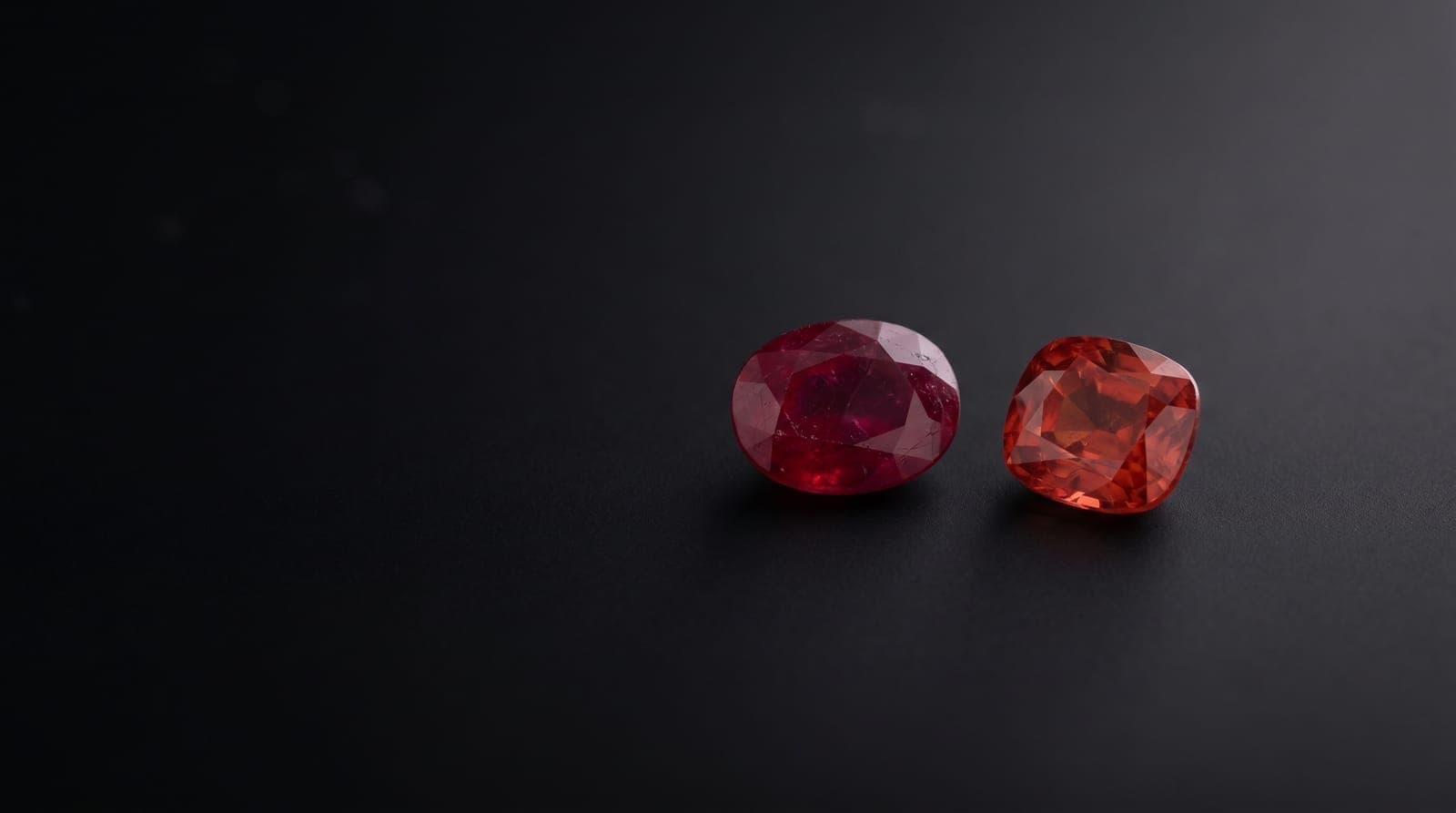
Myanmar (Burma): The premium origin. Burmese rubies from Mogok carry a 20-50% premium over equivalent Mozambique material, driven by prestige, superior fluorescence characteristics, and limited supply. At the top of the market, the Burmese origin premium can exceed 100%.
Mozambique: The value origin. Montepuez produces excellent material that offers comparable beauty at significantly lower prices. For B2B buyers serving markets where origin is secondary to visual quality, Mozambique rubies provide the strongest value proposition.
Madagascar: Produces fine material occasionally rivaling Burmese quality, but with less consistent supply. Prices typically fall between Mozambique and Burma for comparable quality.
Thailand/Cambodia: Historically important but largely mined out for fine material. Thai rubies tend to have higher iron content, producing darker stones with less fluorescence. Prices are generally below Mozambique for comparable sizes.
Sri Lanka: Produces rubies that tend toward lighter tones, sometimes crossing into pink sapphire territory. Fine Sri Lankan rubies are valued but represent a small market segment.
Tanzania/Kenya (Tsavorite deposits area): Emerging origins with occasional fine production. Priced comparably to Mozambique material.
Treatment Status and Price Impact
Treatment is one of the most significant price modifiers in the ruby market. Understanding the treatment hierarchy is essential for accurate pricing.
| Treatment Level | Description | Price Impact vs. Unheated | Market Acceptance |
|---|---|---|---|
| Unheated (No treatment) | No thermal or chemical treatment applied | Baseline (highest value) | Premium market; collectors, investors |
| Heated only (no residue) | Standard heat treatment to improve color/clarity | -30% to -50% | Fully accepted; industry standard |
| Heated with minor residue | Heat treatment with minor glass residue in fissures | -40% to -60% | Accepted with disclosure |
| Low-temperature heated | Mild heating (below 1000°C) for color improvement | -35% to -55% | Well accepted; common for Mozambique |
| Glass-filled (lead glass) | Extensive filling of fractures with lead glass | -80% to -95% | Controversial; must be fully disclosed |
| Diffusion treated | Chemical elements diffused into surface layers | -70% to -90% | Low acceptance in fine market |
Market Trends Affecting Ruby Prices
Several macro trends are shaping ruby per-carat pricing in 2026:
Supply constraints from Myanmar: Political instability continues to restrict Burmese ruby supply to the global market, driving Burmese premiums higher and increasing demand for Mozambique alternatives.
Growing Mozambique acceptance: As Mozambique material gains market acceptance and more lab data confirms its quality, the origin discount relative to Burma is gradually narrowing — good news for buyers who positioned in Mozambique early.
Collector and investment demand: High-net-worth individuals increasingly view exceptional rubies as alternative investments, supporting prices at the top of the market. Unheated Burmese rubies above 5 carats have shown consistent price appreciation over the past decade.
Lab-grown awareness: Growing consumer awareness of lab-grown diamonds has spilled over into colored stones, increasing demand for certified natural rubies with full provenance documentation. This trend supports prices for well-documented natural material. For more on distinguishing natural from synthetic, see our guide to spotting synthetic rubies.
Calibrated goods demand: Steady demand from manufacturing jewelers for calibrated rubies in standard sizes (3mm, 4mm, 5mm rounds and ovals) keeps commercial-grade prices stable.
Practical Pricing Tips for B2B Buyers
Based on decades of trading in the Bangkok market, here are actionable guidelines:
-
Build price references: Track prices on stones you buy and stones you pass on. Over time, you build a personal price database more valuable than any published guide.
-
Compare certified stones: For meaningful price comparisons, always compare stones with equivalent lab reports from the same or comparable laboratories.
-
Understand the parcel dynamic: Calibrated goods are sold in parcels. The per-carat price of a parcel reflects the average quality — always inspect parcels for consistency and remove outlier stones that would affect your average cost.
-
Factor total cost: The per-carat purchase price is not your total cost. Add certification fees, customs duties, shipping insurance, and potential cutting/re-polishing costs to determine your true cost basis.
-
Negotiate from knowledge: Understanding the price ranges in this guide gives you a negotiation framework. If a supplier quotes outside these ranges, either the stone is exceptional (verify with certification) or the price needs adjustment.
-
Time your purchases: Ruby prices in Bangkok tend to be most competitive during the February-March gem shows and slightly softer during the quiet season (July-August). However, the best stones move quickly regardless of season.
Understanding ruby pricing per carat is an ongoing education — the market evolves, new sources emerge, and demand patterns shift. Explore our current ruby inventory to see real pricing on certified stones, or contact our team to discuss bulk pricing for your specific requirements.