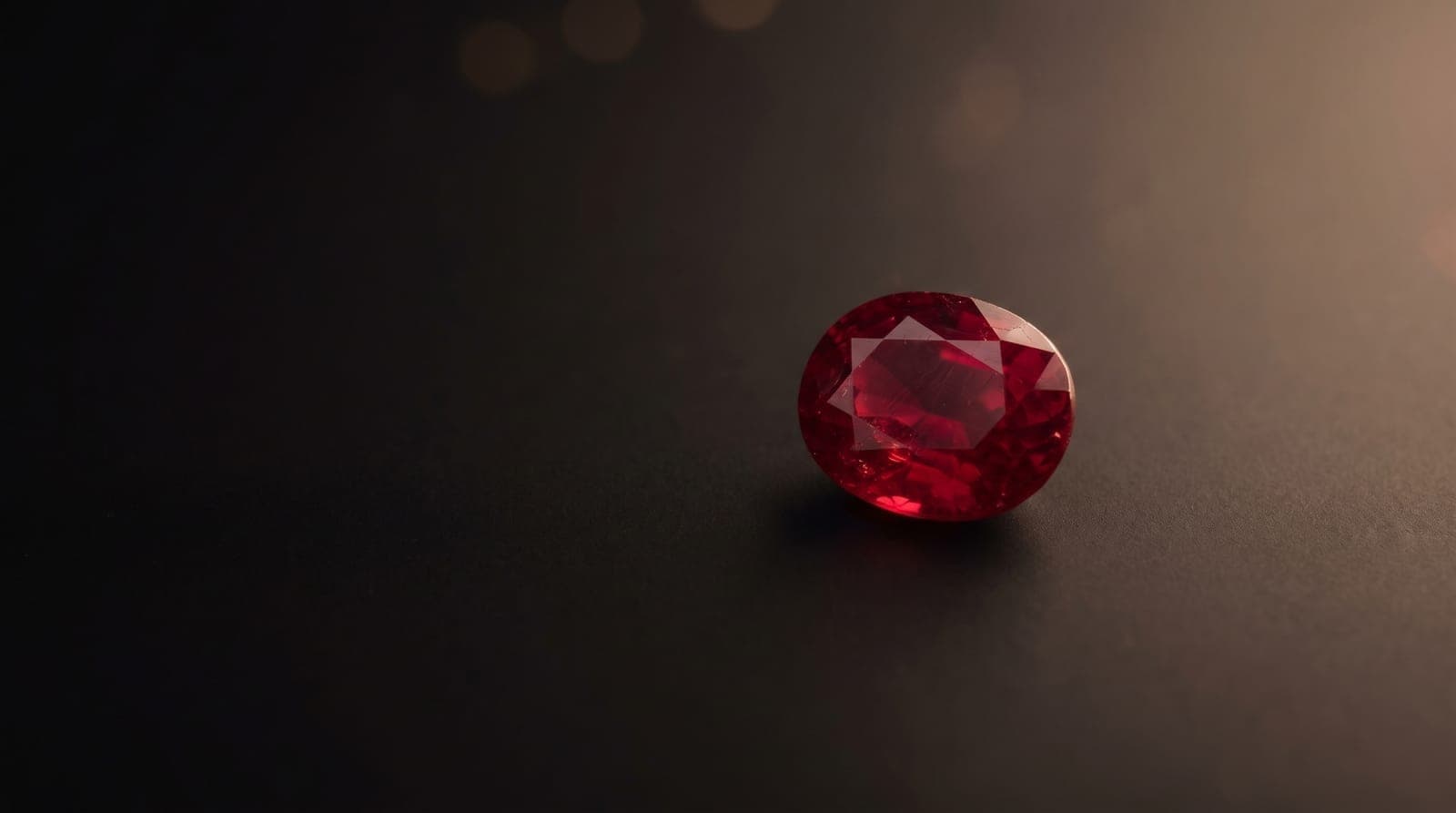
Understanding Ruby Grading for Wholesale Buyers
Ruby grading differs fundamentally from diamond grading, and B2B buyers who apply diamond-grading logic to rubies make costly mistakes. While the GIA 4Cs framework (color, clarity, cut, carat weight) provides a useful starting structure, the relative weight of each factor is dramatically different for rubies than for diamonds.
This guide explains how professional gemologists and experienced dealers evaluate rubies, with a focus on the two most debated factors: color and clarity. Whether you are sourcing rubies for high-end retail, manufacturing, or collection pieces, understanding this hierarchy will directly improve your buying decisions. For practical pricing benchmarks that reflect this grading framework, see our ruby price per carat guide, and for the full sourcing workflow, our ruby buying guide.
The Value Hierarchy in Ruby Grading
Before diving into the color vs. clarity debate, it is important to understand how all four value factors rank for rubies:
This hierarchy is the opposite of diamonds, where clarity often rivals or exceeds color in importance. The reason lies in the fundamental nature of the gemstone: rubies are classified as Type II gemstones, meaning they almost always form with some inclusions. A completely inclusion-free ruby is extraordinarily rare and, in some cases, may even raise suspicion of synthetic origin.
Color Grading in Detail
Color evaluation in rubies involves three independent dimensions that together determine a stone's color grade: hue, saturation, and tone.
Hue
Hue refers to the dominant spectral color and any secondary color modifiers. For rubies, the ideal is a pure red hue with minimal secondary colors. The most common secondary hues in rubies are:
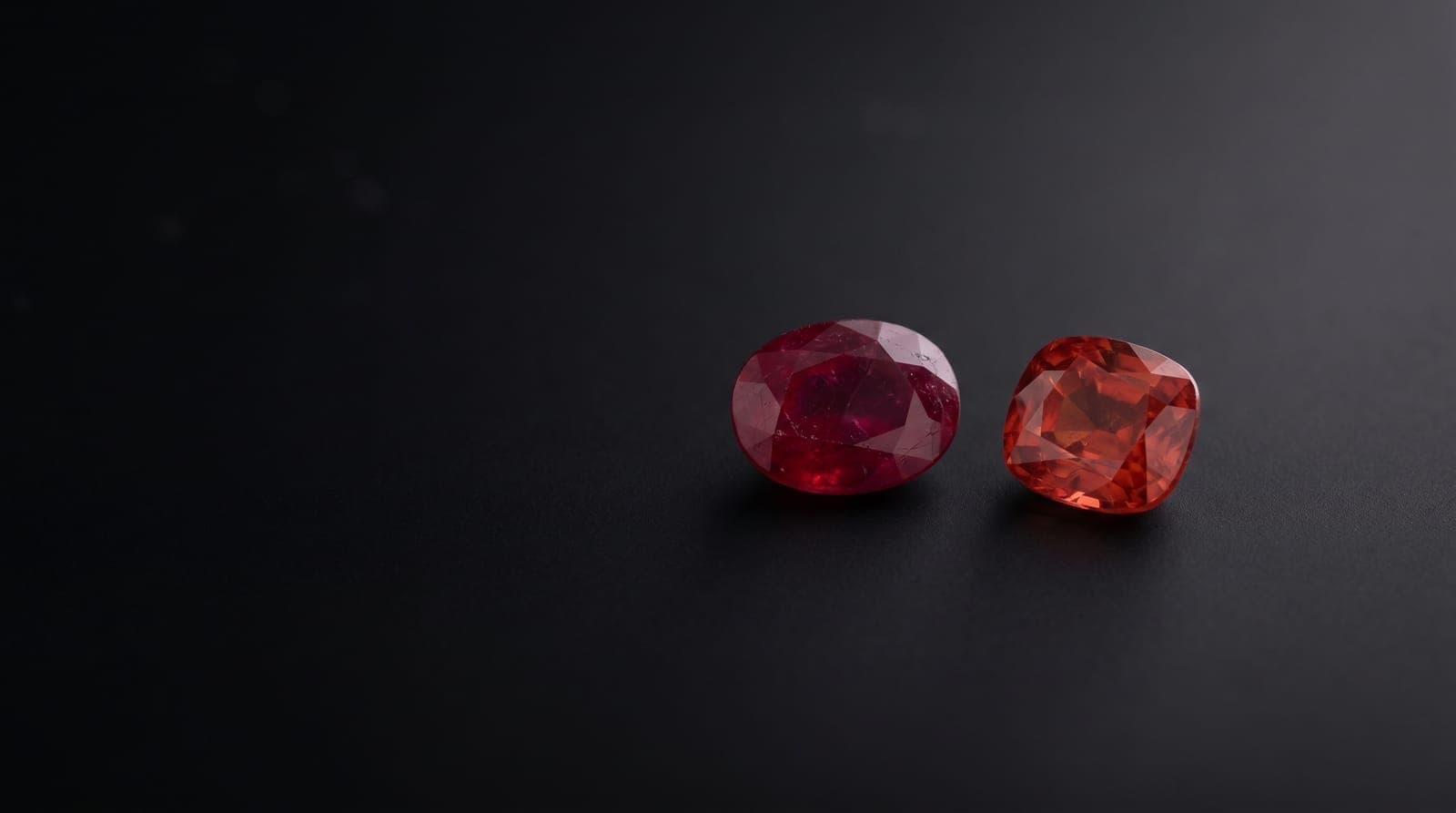
- Purple/blue modifier: A slight blue secondary is acceptable and, in small amounts, is actually characteristic of the finest pigeon blood rubies. Excessive purple shifts the stone toward "purplish red," which reduces value.
- Orange modifier: An orange secondary creates "orangish red" rubies, which are less valued than pure red but still firmly in the ruby category. Strongly orange stones may be classified as padparadscha sapphire (if pink-orange) or simply as lower-grade rubies.
- Pink boundary: The line between ruby and pink sapphire is debated. GIA draws the boundary at a specific saturation threshold — stones below it are pink sapphire, above it are ruby. Different labs and markets draw this line differently, which creates genuine classification disputes.
Saturation
Saturation describes the intensity or vividness of the color. This is arguably the single most important sub-factor in ruby valuation. The saturation scale ranges from grayish/brownish (desaturated) through moderate to vivid/intense.
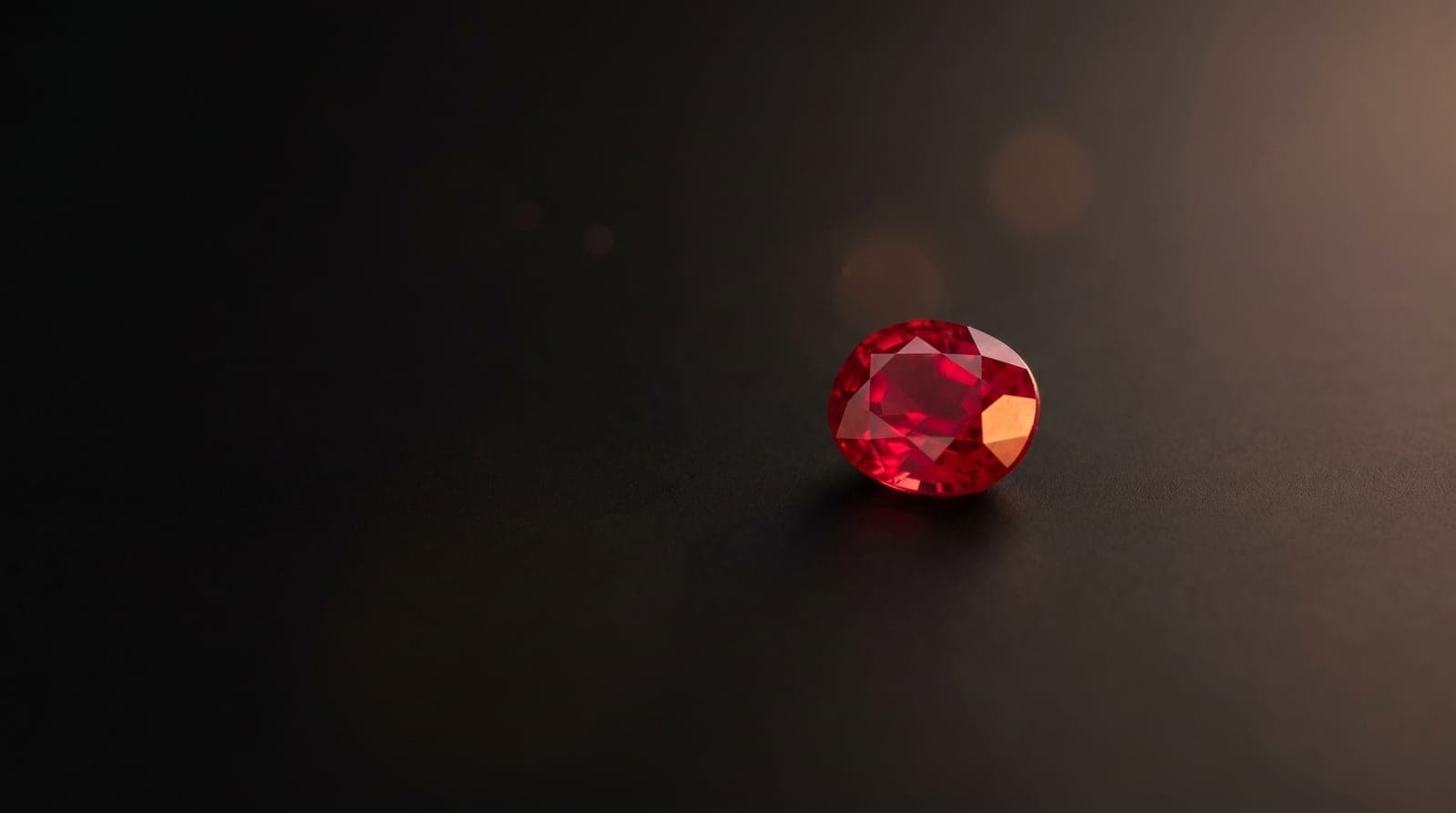
- Vivid: The highest saturation grade. The color appears to glow from within. This is the territory of pigeon blood designation.
- Strong: Excellent color that is clearly saturated but lacks the electric quality of vivid stones.
- Moderate: Acceptable for commercial goods but noticeably less intense than fine material.
- Weak/Grayish: Significantly reduces value. Rubies with brownish or grayish modifiers fall here.
Tone
Tone measures how light or dark the color appears, on a scale from very light (near colorless) to very dark (near black).
- Too light (20-40%): The ruby appears pink rather than red, regardless of saturation. Market resistance increases.
- Ideal range (60-80%): Medium to medium-dark tone allows the color to express maximum saturation without losing to extinction.
- Too dark (85%+): The ruby appears blackish-red. Even strongly saturated stones look dull when the tone is too deep because light cannot escape the stone effectively.
Clarity Grading in Detail
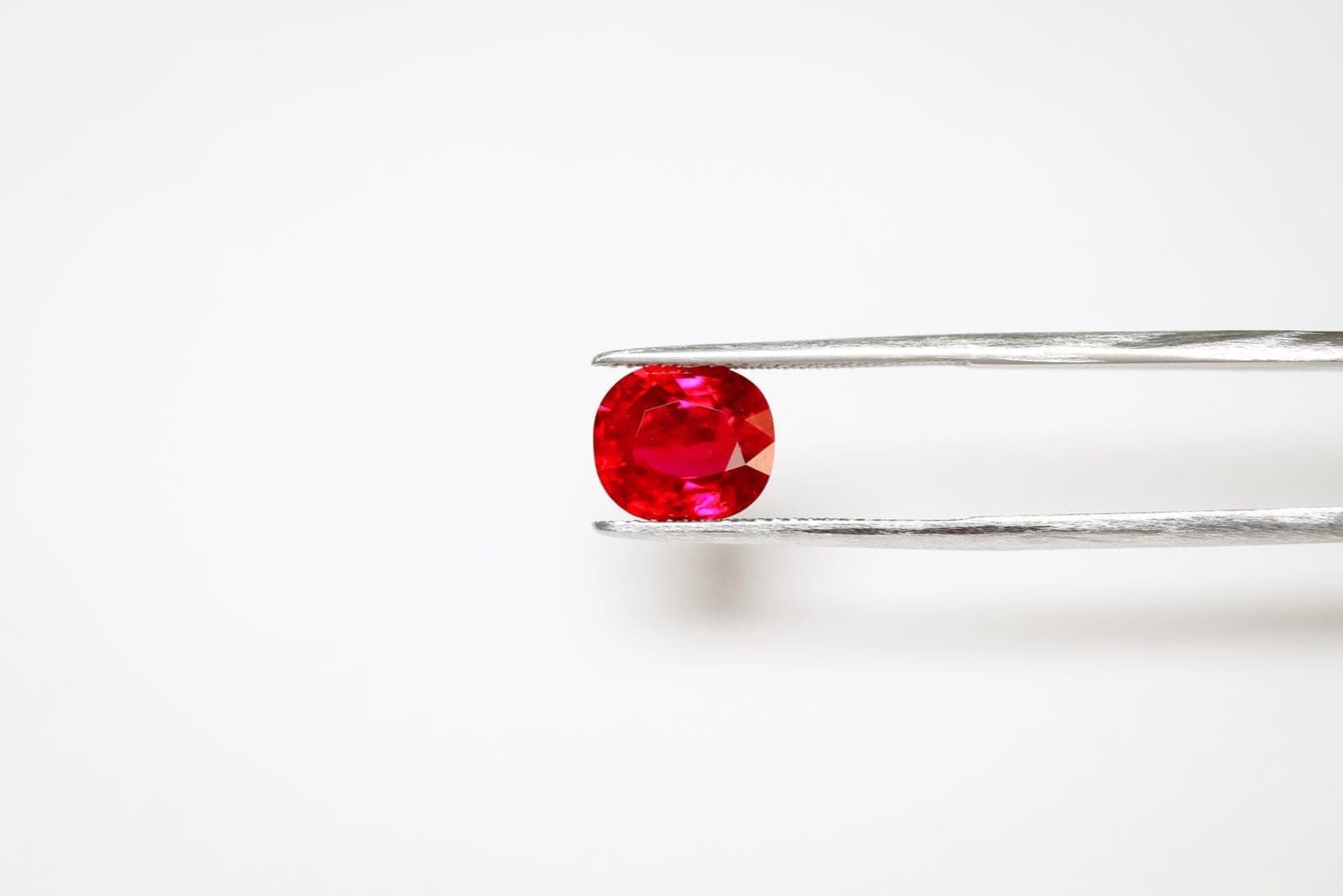
Ruby clarity grading follows different standards than diamond clarity grading. Because rubies are Type II gemstones, the baseline expectation is that inclusions will be present. The grading system reflects this reality.
GIA Clarity Grades for Colored Stones
GIA uses a descriptive clarity system for colored stones that differs from the familiar diamond clarity scale:
Inclusion Types and Their Impact
Not all inclusions affect value equally. Understanding which inclusions are acceptable — even desirable — is key to smart buying.
Acceptable inclusions:
- Fine silk (rutile needles): In moderate density, fine silk creates a velvety, soft appearance that is prized in the finest Burmese rubies. This is an inclusion that can actually add value.
- Small crystal inclusions: Tiny mineral crystals fully enclosed within the ruby are common and, when not visible to the unaided eye, have minimal impact on value.
- Growth zoning: Color zoning visible only under magnification is common and does not affect face-up appearance.
Problematic inclusions:
- Surface-reaching fractures: These affect durability and can worsen over time, particularly in stones set in rings.
- Large dark inclusions: Visible dark spots in the face-up view directly reduce beauty and value.
- Heavy silk: Excessive silk makes the stone appear cloudy or "sleepy" in a negative sense, reducing transparency and brilliance.
- Cavities: Open cavities on the surface create durability concerns and may trap dirt over time.
The Color vs. Clarity Trade-Off in Practice
Now for the core question: when you must choose between better color or better clarity, which should you prioritize?
The market answer is clear: color wins
In practical wholesale trading, a ruby with exceptional color and moderate clarity (SI1-SI2) will consistently outsell and outprice a ruby with average color and excellent clarity (VVS-VS). The pricing data supports this unambiguously.
Consider two hypothetical 2-carat rubies:
Stone A: Vivid red (near pigeon blood), SI1 clarity with minor silk visible under magnification. Wholesale price: $8,000-12,000 per carat.
Stone B: Moderate red with slight brownish modifier, VS clarity with only tiny pinpoint inclusions under 10x. Wholesale price: $2,000-4,000 per carat.
Stone A commands 2-4x the price of Stone B despite having lower clarity, because the color drives the vast majority of the value equation.
Practical Buying Guidelines
Based on our decades of experience sourcing rubies in Bangkok, here are actionable guidelines for different buyer segments:
For high-end retail (engagement rings, statement pieces):
- Prioritize vivid to strong saturation, pure red hue
- Minimum clarity: eye-clean (SI1 or better)
- Budget 70% of your quality premium toward color
For mid-range jewelry manufacturing:
- Target strong saturation with acceptable modifiers
- Eye-clean preferred but minor visible inclusions acceptable
- Focus on consistent color across parcels for matched sets
For calibrated goods and melee:
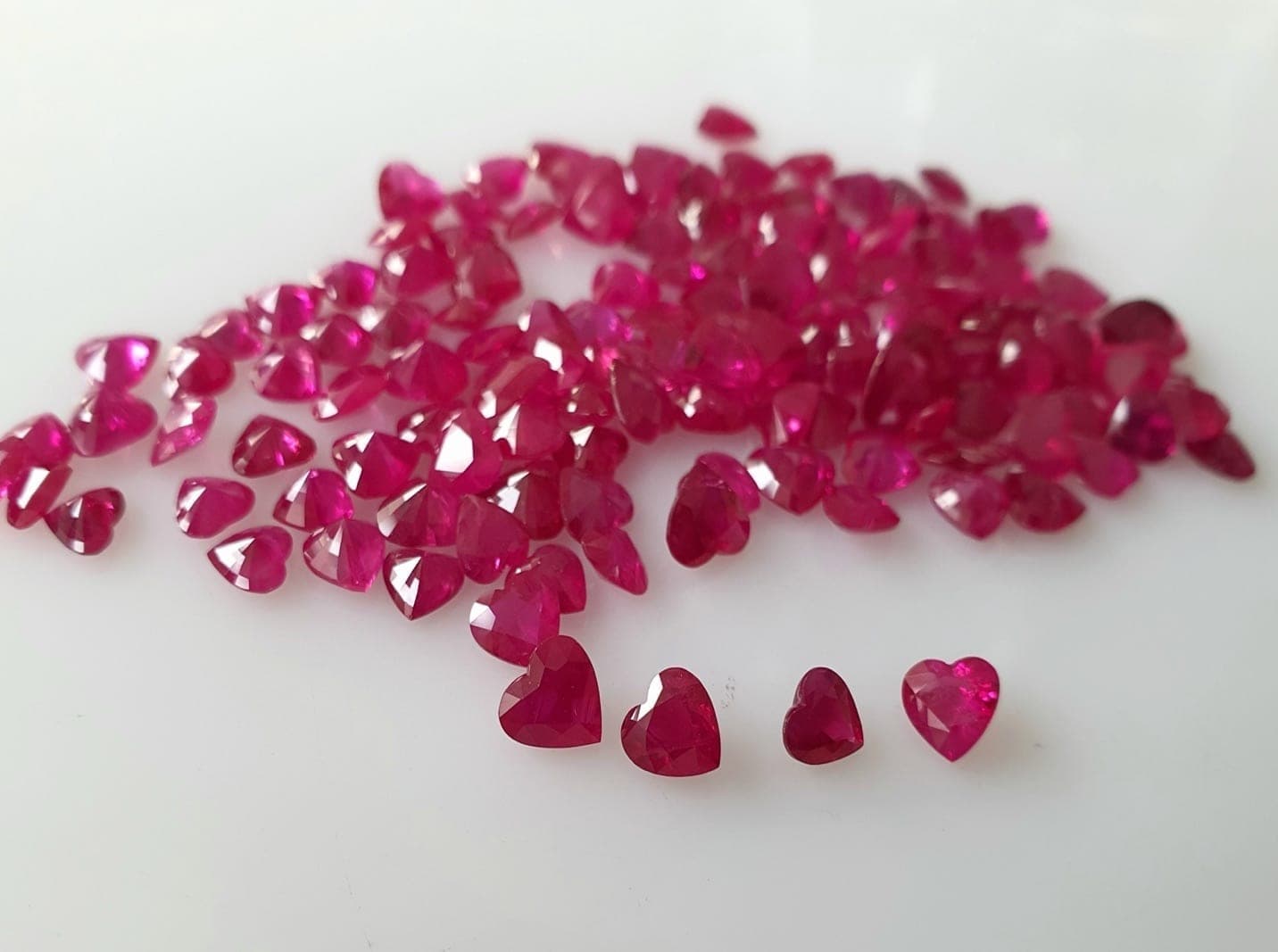
- Color consistency across the lot matters more than individual stone grading
- Clarity must be acceptable for the setting style (bezel settings are more forgiving than prong settings)
- Price primarily on color and cut quality
For collection and investment:
- Demand both top color (pigeon blood or vivid red) and excellent clarity (VS or better)
- Require certification from recognized labs (GRS, Gubelin, GIA)
- Unheated status with pigeon blood designation is the pinnacle
The Role of Cut in Presenting Color and Clarity
While this guide focuses on color and clarity, cut deserves mention because it directly affects how both factors present to the viewer.
A well-proportioned ruby maximizes color saturation by controlling light return. Shallow cuts can create "windows" — transparent areas where body color washes out. Deep cuts can cause "extinction" — dark zones where light is lost. Both problems reduce the effective color grade of the stone.
Similarly, a skilled cutter positions known inclusions away from the table facet, effectively improving the apparent clarity of the finished stone. This is why rough evaluation — predicting how a piece of rough will cut — is one of the most valuable skills in the ruby trade.
How Labs Grade Ruby Quality
Major gemological laboratories approach ruby grading differently, and B2B buyers should understand these differences:
GIA provides the most detailed clarity grading but does not use commercial color names like "pigeon blood." Their reports describe color in technical terms (hue, saturation, tone) and provide a clarity grade using their colored stone scale.
GRS is widely preferred in the Asian market because they do assign commercial color names, including "Pigeon Blood" and "Royal Blue." Their reports also include origin determination and treatment analysis.
AIGS in Bangkok offers cost-effective certification that is well-accepted in the Asian wholesale trade. Their grading combines visual assessment against master stones with instrumental analysis.
For stones above 2 carats, we recommend obtaining reports from at least one internationally recognized lab. The cost is modest relative to the pricing clarity it provides.
Understanding the balance between color and clarity is what separates profitable ruby buying from guesswork. Explore our ruby inventory to see how these grading principles apply to real stones, or contact our team to discuss specific requirements for your business. For a side-by-side look at how origin affects the quality you can expect at each grade level, our Burmese vs Mozambique ruby comparison is a useful companion read.