Why Thailand Dominates the Global Gemstone Trade
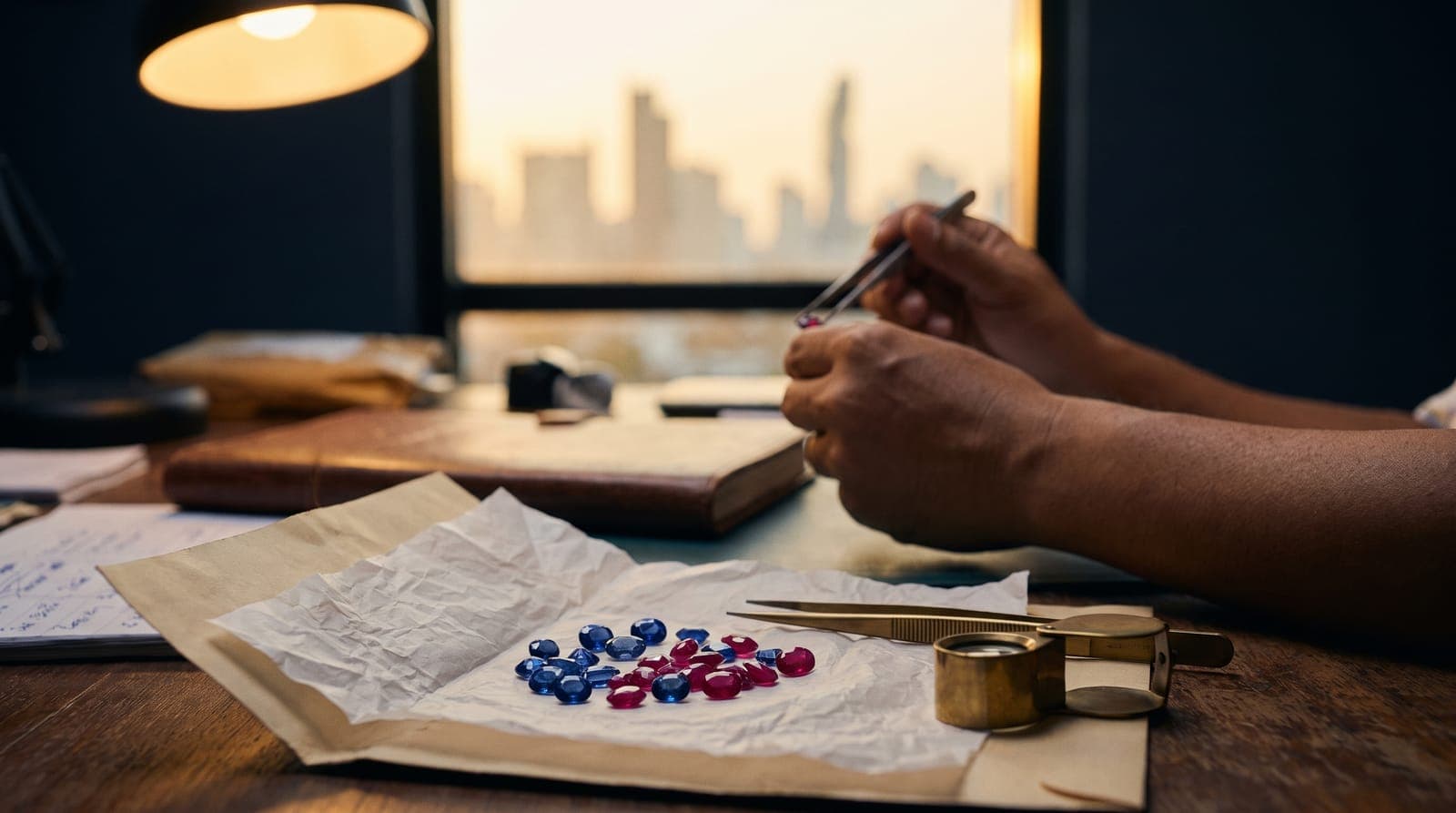
Thailand — and Bangkok in particular — has been the epicenter of the global colored gemstone trade for over half a century. An estimated 60-80% of the world's colored gemstones pass through Bangkok at some point in their journey from mine to market. This dominance was not accidental: it emerged from a convergence of geographic advantage, skilled labor, supportive government policy, and decades of accumulated trade expertise.
Gemstone sourcing is defined as the commercial process of identifying, evaluating, negotiating, and procuring gem-quality stones from producers, dealers, or cutting facilities for resale, manufacturing, or retail distribution.
For B2B buyers — whether you are a jewelry manufacturer, retail chain, or independent dealer — sourcing directly from Thailand offers access to the widest selection of colored gemstones, competitive pricing, and a well-established infrastructure for quality control and certification. This guide walks through every step of the process, from identifying the right supplier to shipping stones to your facility.
Step 1: Understand the Thai Gemstone Supply Chain
Before sourcing from Thailand, it helps to understand how the supply chain is structured. Bangkok's gem trade operates across several interconnected layers:
Rough dealers
These traders import uncut gemstone material directly from mines in Myanmar, Sri Lanka, Madagascar, Tanzania, Mozambique, and other producing countries. They sell rough parcels to cutters and factories. Some specialize in specific origins or gemstone types.
Cutting factories
Factories like Lim Gems Factory purchase rough material and process it into finished, polished stones. Vertically integrated factories handle the entire process: rough evaluation, cutting, polishing, sorting, and grading. This is where most of the value is added. For an overview of what our cutting service offers, see our precision cutting service page.
Dealers and brokers
Independent dealers operate throughout Bangkok's gem district (concentrated around Silom Road, Mahesak Road, and the Jewelry Trade Center building). They maintain inventories of finished stones and act as intermediaries between factories and international buyers.
Trade shows and markets
Thailand hosts several major gem trade events, including the Bangkok Gems & Jewelry Fair (held twice annually), which draws thousands of international buyers. Between major shows, daily trading occurs in established market buildings and private showrooms.
For most B2B buyers, the most efficient sourcing model is to work directly with a cutting factory that also handles rough procurement. This factory-direct approach eliminates intermediary markups and gives you direct influence over cutting specifications, quality grading, and delivery schedules. Learn more about our factory-direct model.
Step 2: Identify and Vet Potential Suppliers
Finding reliable suppliers is the most critical step in your Thailand sourcing strategy. The Thai gemstone market includes thousands of registered businesses, ranging from one-person dealerships to large-scale cutting operations — our guide to buying gemstones in Bangkok maps where the trade happens. Here is how to evaluate them:
Business verification
- Confirm the supplier holds a valid Thai business registration (check with the Department of Business Development).
- Look for membership in recognized trade associations: the Thai Gem and Jewelry Traders Association (TGJTA), the Thai Gem and Jewelry Manufacturers Association (TGJMA), or similar bodies.
- Verify they have a physical business location — factory or showroom — that you can visit or that has been verified by other buyers.
Track record
- Request trade references from existing B2B customers, ideally in your market region.
- Check how long the company has been operating. Longevity in the Bangkok gem trade is a strong positive signal.
- Look for an established online presence with consistent branding and professional communication.
Capabilities
- Cutting: Does the supplier cut in-house or source pre-cut stones from other workshops? In-house cutting means greater control over calibration, quality, and customization.
- Inventory: Do they maintain standing inventory in popular sizes and qualities, or do they source to order? Both models work, but inventory-holding suppliers can fulfill orders faster.
- Certification: Can the supplier coordinate laboratory certification through GIA, AIGS, or GIT? Proximity to these labs in Bangkok is a significant advantage. Our guide on GIA vs AIGS vs GIT certification explains which lab report suits which transaction type.
- Communication: Evaluate response times, English proficiency, and willingness to answer detailed technical questions. Good communication prevents costly misunderstandings.
At Authentic Gemstone, we are transparent about our capabilities and background. We encourage prospective buyers to review our services and reach out with questions before placing a first order.
Step 3: Request and Evaluate Samples
Never commit to a large order without first evaluating sample material. The standard B2B process follows this pattern:
Approval lots
Request a small lot (typically 20-50 stones) in your target size, quality, and gemstone type. Specify:
- Gemstone type and variety (e.g., blue sapphire, pink tourmaline, red spinel)
- Calibrated size and shape (e.g., 4mm round, 6x4mm oval)
- Quality grade or specific color/clarity requirements
- Treatment preferences (heated, unheated, specific treatment types)
- Certification requirements if applicable
A reputable supplier will either send an approval lot for your inspection (usually with return privileges if the material does not meet specifications) or provide detailed photographs and video of available material.
Evaluation criteria
When your approval lot arrives, evaluate:
- Color consistency: Are the stones reasonably matched within the lot? Minor variation is normal, but the lot should read as cohesive.
- Calibration accuracy: Measure at least 10 stones with a digital caliper. Tolerance should be +/- 0.10mm or better.
- Cutting quality: Check symmetry, polish quality, and proportions. Windowing (visible see-through areas) and extinction (dark zones) should be minimal.
- Clarity: Verify that the clarity matches what was described. Use 10x magnification and evaluate face-up.
- Treatment disclosure: Confirm the treatment status matches the supplier's claims.
Photography and video
For remote sourcing, high-quality photography is essential. Request images shot on a neutral background under standardized lighting. Video showing the stone's light performance in motion is increasingly standard. Some suppliers offer live video calls where they show stones in real time.
Step 4: Negotiate Terms and Place Orders
Once you have approved sample material and are ready to move forward with production quantities, here are the key commercial terms to agree on:
Pricing
Gemstone pricing in Bangkok is typically quoted per carat in US dollars. Prices should be broken down by quality grade, size, and any premium for specific origins. Request a written price list or quotation that you can reference for future orders.
Volume pricing is standard — larger orders typically receive better per-carat rates. However, be realistic about minimums: requesting volume pricing on a 50-stone lot is not customary.
Payment terms
Standard payment structures in the Thai gem trade include:
- Wire transfer (T/T): The most common method for international B2B transactions. Typically 30-50% deposit upon order confirmation, balance upon delivery or before shipping.
- Letter of credit (L/C): Used for larger transactions (typically above $50,000) where additional bank-guaranteed payment security is desired.
- PayPal/trade assurance: Sometimes used for smaller initial orders, though fees reduce cost-effectiveness.
For first orders with a new supplier, expect to pay a higher deposit percentage or full payment upfront. As the relationship develops and trust is established, terms typically become more flexible.
Lead times
- In-stock calibrated material: 3-7 business days for sorting, quality control, and shipping preparation.
- Custom cutting from rough: 2-4 weeks depending on the gemstone type, quantity, and size specifications.
- Certification: Add 3-14 days depending on the lab (GIA takes longer; AIGS and GIT are faster).
Always confirm lead times in writing and build buffer into your production schedule.
Step 5: Quality Control and Inspection
Robust quality control is what separates successful sourcing relationships from problematic ones. Establish clear QC expectations upfront:
Pre-shipment inspection
For orders above $5,000, consider requesting a pre-shipment inspection. This can be done through:
- Video inspection: Your supplier walks through the finished order on a video call, showing stones individually and as a lot.
- Third-party inspection: Hire an independent gemologist in Bangkok to inspect the order before it ships. Several independent services operate in the gem district.
- Laboratory verification: Submit a random sample from the lot to an independent lab (GIA, AIGS, or GIT) to verify identity, treatment, and quality claims.
Ongoing quality standards
For recurring orders, establish a written quality standard document that specifies:
- Acceptable color range (ideally with reference photos or physical master stones)
- Calibration tolerances
- Minimum clarity grade
- Treatment status requirements
- Rejection criteria and procedures
At Authentic Gemstone, we maintain internal quality control at every stage of production — from rough evaluation through final sorting. Our QC process includes calibration verification, color matching to approved reference stones, and individual stone inspection for clarity and cutting quality.
Step 6: Shipping and Customs
Shipping methods
Gemstones are typically shipped via express courier (FedEx, DHL, UPS) with full insurance coverage. Shipping costs are low relative to the goods' value — a $50,000 parcel of sapphires weighs grams, not kilograms.
Key shipping considerations:
- Insurance: Always insure shipments for full declared value. Reputable suppliers include insurance as standard or offer it at minimal additional cost.
- Packaging: Stones should be individually parceled by size and quality, packed in secure containers, and sealed with tamper-evident tape.
- Documentation: Each shipment should include a commercial invoice, packing list with stone counts and weights, and any relevant laboratory certificates.
Import regulations
Import regulations vary significantly by country. Key points for common markets:
- United States: Gemstones enter under Harmonized Tariff Schedule Chapter 71. Most colored gemstones (natural, not set) enter duty-free. A commercial invoice is required; formal entry is required for shipments valued above $2,500.
- European Union: Similar tariff treatment. Colored gemstones generally enter at 0% duty. VAT applies and is payable on import.
- India: Import duty on cut and polished colored gemstones is currently 0% under specific tariff headings, though GST applies.
- China/Hong Kong: Hong Kong operates as a free port with no duty on gemstones. Mainland China applies duties that vary by stone type and processing level.
Always consult with your country's customs authority or a licensed customs broker before your first import to confirm current rates and documentation requirements.
Export from Thailand
Thai gemstone exporters handle the export documentation process. Legitimate B2B suppliers are experienced with export procedures and will provide all necessary paperwork. Thailand does not impose export duties on cut and polished gemstones.
Step 7: Build Long-Term Supplier Relationships
The most successful B2B gemstone sourcing operations are built on long-term relationships rather than one-off transactions. Here is how to develop a strong supplier partnership:
Regular communication
Stay in touch between orders. Share feedback on how previous shipments performed — which stones sold well, what your customers are requesting, and where quality could be improved. Suppliers who understand your market can proactively suggest material that fits your needs.
Visit in person
If your order volume justifies it, visit your supplier's facility at least once. A factory tour reveals capabilities, quality standards, and working conditions in ways that photographs and phone calls cannot. Bangkok is well-connected internationally, and combining a sourcing trip with the biannual Bangkok Gems & Jewelry Fair maximizes your time.
We welcome B2B buyers to visit our facility and see our cutting, sorting, and quality control processes firsthand. Contact us to schedule a visit.
Fair dealing
The Bangkok gem trade operates substantially on trust and relationships. Pay invoices promptly, communicate honestly about quality concerns, and treat pricing discussions as collaborative rather than adversarial. Suppliers who value your business will prioritize your orders, alert you to exceptional material before it reaches the open market, and work harder to meet your specifications.
Common Mistakes to Avoid
Years of experience in the Bangkok gem trade have shown us the most common pitfalls that new B2B buyers encounter:
-
Buying on price alone. The cheapest per-carat price almost always means compromises on color consistency, calibration accuracy, or treatment disclosure. Total cost of quality matters more than unit cost.
-
Skipping the approval lot. Always evaluate sample material before committing to volume. Photos are helpful but cannot fully replace physical inspection.
-
Ignoring treatment details. Failing to specify and verify treatment status leads to costly returns, damaged customer relationships, and potential legal issues in markets with strict disclosure laws.
-
Underestimating calibration requirements. If your jewelry production line requires +/- 0.05mm tolerance, specify that upfront. Loose calibration tolerances cause setting problems that are far more expensive than the per-stone cost savings.
-
Neglecting certification for high-value stones. For individual stones above $1,000, laboratory certification protects both buyer and seller. The cost is a small percentage of the stone's value and provides essential documentation.
-
Working with tourist-oriented shops. Bangkok has a well-documented tourist gem scam problem. B2B buyers should work exclusively with registered wholesale operations — never with shops that approach you on the street or at tourist locations.
Gemstone Types Available Through Thailand
Thailand's position as a trading hub means virtually all colored gemstone varieties are available. The primary categories sourced through Bangkok include:
- Sapphires: All colors, with particular strength in blue, pink, and yellow. Origins include Sri Lanka, Madagascar, Myanmar, and Australia. Our Ceylon vs Thai sapphire guide explains the key origin differences.
- Rubies: Burmese, Mozambican, and Thai material. Bangkok is the world's primary processing center for ruby.
- Emeralds, tourmalines, spinels, and other colored gems: Full range of specialty colored gemstones, cut and sorted to B2B specifications.
Start Your Thailand Sourcing Journey
Whether you are an established jewelry manufacturer looking to diversify your supply chain or a new buyer exploring direct sourcing for the first time, Thailand offers the most efficient, transparent, and well-supported environment for B2B gemstone procurement.
At Authentic Gemstone, backed by Lim Gems Factory in Bangkok, we have helped buyers across six continents source quality colored gemstones with confidence. Our services span the full sourcing cycle — from rough selection and custom cutting to certification coordination and international shipping.
The first step is simple: tell us what you need. Our team will respond within 24 hours with availability, pricing, and a clear plan to get the stones you need to your production line.

Key Takeaways
- Thailand handles 60-80% of the world's colored gemstone trade — sourcing from Bangkok gives you access to the widest selection and most competitive pricing.
- Work directly with cutting factories rather than brokers to minimize cost and maximize quality control.
- Always vet suppliers through business verification, trade references, and approval lots before committing to volume orders.
- Establish clear quality standards, calibration tolerances, and treatment requirements in writing.
- Build long-term relationships — the best sourcing outcomes come from ongoing partnerships, not transactional buying.