Why Gemstone Selection Is a Strategic Decision
Choosing gemstones for a jewelry line is not simply about picking a pretty stone. It is a strategic business decision that affects your production costs, manufacturing workflow, brand positioning, retail margins, and customer satisfaction for years to come. The wrong gemstone choice can lead to production headaches, warranty claims, and merchandise that sits unsold.
This guide approaches gemstone selection from a business perspective — helping B2B jewelry manufacturers and brand owners make informed decisions that align with their market position and operational capabilities.
Start With Your Market Position
Before evaluating individual gemstones, define where your jewelry line sits in the market. This positioning determines the quality tier, price range, and stone types that make strategic sense.
Luxury and Fine Jewelry ($500+ retail per piece)
At this tier, customers expect natural gemstones with documented quality and, often, specific origins. The gemstone is a primary selling point and justifies premium pricing.
Recommended stones: Fine sapphires (Ceylon or Burma origin), rubies (Burma origin, minimal treatment), emeralds (Colombian), fine spinels, alexandrite, Paraiba tourmaline.
Sourcing considerations: Individual stone selection or tightly graded parcels. Lab certificates (GIA, AIGS, Gübelin) often required for stones above 1 carat. Treatment disclosure is mandatory and must be passed to the end customer.
Mid-Range Jewelry ($150-500 retail per piece)
The broadest market segment, where quality and value must balance. Customers appreciate gemstone beauty but are more price-sensitive than luxury buyers.
Recommended stones: Standard to fine heated sapphires (any origin), commercial rubies, good-quality tourmalines, tanzanite, aquamarine, quality garnets (rhodolite, tsavorite, demantoid).
Sourcing considerations: Calibrated parcels sorted to consistent quality. Origin is a marketing plus but not required. Standard heat treatment is perfectly acceptable and expected.
Accessible/Fashion Jewelry (under $150 retail per piece)
At this price point, visual impact and durability must be achieved within tight cost constraints. Consistency across a production run matters more than individual stone quality.
Recommended stones: Commercial-grade sapphires, garnets (almandine, pyrope, rhodolite), amethyst, citrine, peridot, blue topaz, iolite, commercial spinels.
Sourcing considerations: Lot pricing, machine-cut calibrated stones, larger volume orders to achieve price breaks. Consistent color across the lot is the key quality metric.
| Market Tier | Stone Budget (% of retail) | Minimum Quality | Key Selection Factor |
|---|---|---|---|
| Luxury ($500+) | 15-30% | Fine to extra-fine | Origin, rarity, documentation |
| Mid-range ($150-500) | 8-15% | Good to fine | Color consistency, durability |
| Accessible (under $150) | 5-10% | Commercial to good | Cost per stone, visual impact |
Durability: The Non-Negotiable Factor
No matter how beautiful a gemstone looks in the display case, if it cannot survive daily wear in the intended jewelry type, it will generate returns and damage your brand reputation. Durability encompasses three properties:
Hardness (Scratch Resistance)
Measured on the Mohs scale (1-10), hardness determines whether a stone will maintain its polish over time. The minimum recommended hardness depends on the jewelry type:
- Rings (daily wear): Mohs 7 or above. Rings are exposed to constant abrasion — anything softer than quartz (7) will show wear within months.
- Earrings and pendants: Mohs 6 or above. These pieces experience less abrasion, allowing softer stones to be used safely.
- Bracelets: Mohs 7.5 or above recommended. Bracelets experience more impact than rings from hitting surfaces.
- Brooches: Mohs 5.5 or above. Minimal wear exposure.
Toughness (Resistance to Breakage)
Hardness and toughness are different properties. Emerald rates 7.5-8 on the Mohs scale (good hardness) but has poor toughness due to internal fractures and inclusions. Jade rates only 6-7 on Mohs hardness but has exceptional toughness due to its interlocking crystal structure.
Stones with poor toughness — emerald, tanzanite, opal — require protective settings (bezel, halo) and should be marketed with care instructions. Factor in the cost of protective settings when calculating your total product cost.
Stability (Resistance to Environmental Damage)
Some gemstones are sensitive to heat, light, or chemicals:
- Tanzanite: Can crack under thermal shock (avoid ultrasonic cleaning)
- Kunzite: Fades with prolonged light exposure
- Opal: Can craze (develop surface cracks) in dry conditions
- Pearl: Damaged by acids, perfumes, and hairspray
- Emerald: Oil treatments can be removed by ultrasonic cleaning or solvents
For B2B manufacturers, stability issues translate directly into warranty claims and customer dissatisfaction. Either avoid sensitive stones for everyday jewelry or invest in customer education materials that help retailers communicate proper care.
Color Trends vs. Evergreen Selections
Balancing trend-driven color choices with timeless selections is crucial for inventory management and long-term brand building.
Evergreen Gemstones (Always in Demand)
These stones have demonstrated consistent demand across decades and market cycles:
- Blue sapphire: The quintessential colored gemstone for fine and mid-range jewelry. Stable demand driven by engagement rings, anniversary pieces, and classic designs. See our full sapphire collection and our sapphire buying guide to understand quality tiers.
- Ruby: Enduring symbol of passion and luxury. Strong demand at all quality tiers. Explore our ruby offerings.
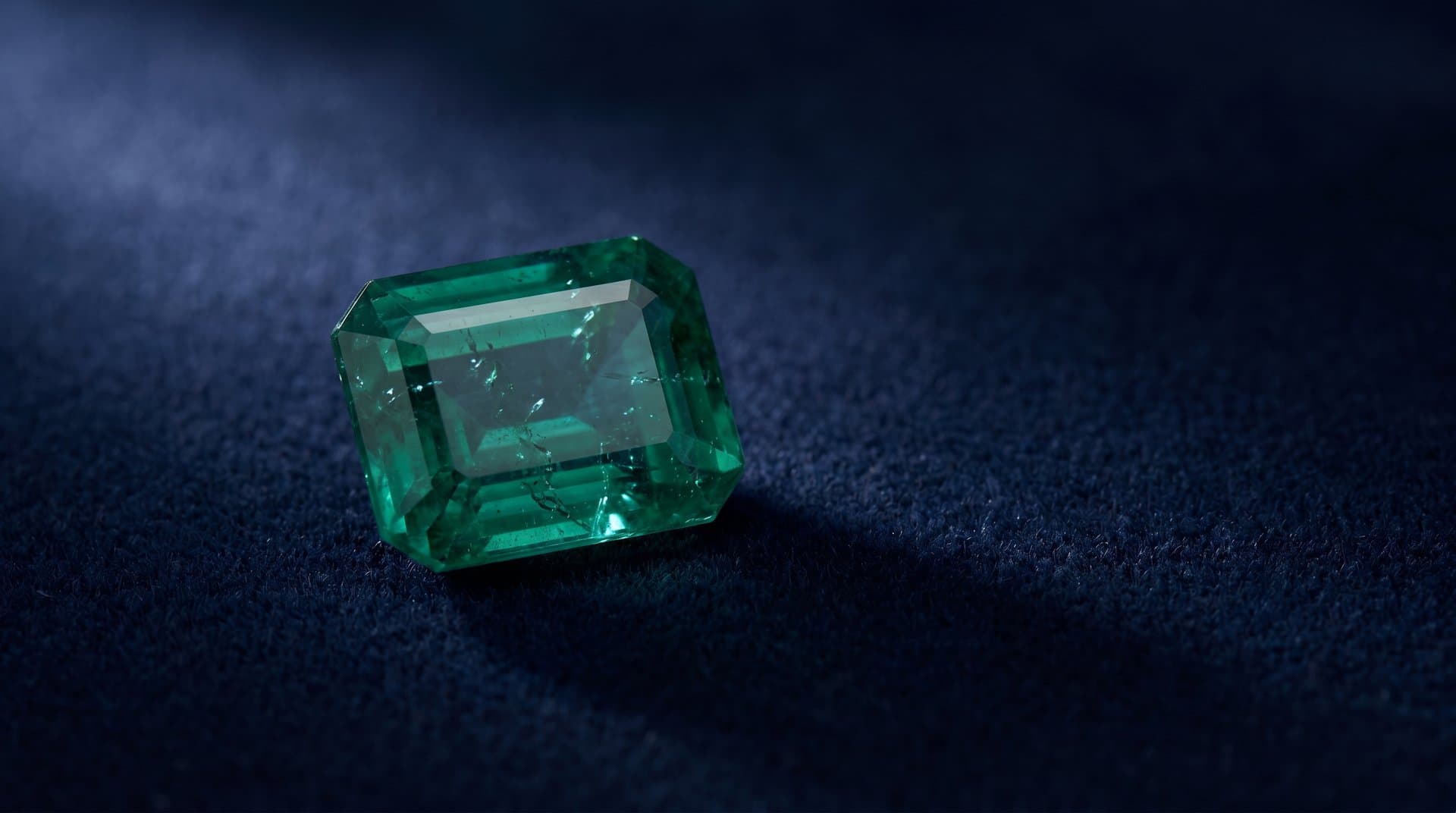
- Emerald: Timeless green that transcends trends. Higher maintenance than sapphire or ruby, but unmatched in color saturation.
- Diamond accent stones: White and fancy-color melee diamonds are the backbone of most jewelry lines.
Trend-Responsive Stones
These stones experience demand cycles tied to fashion trends, celebrity influence, and Pantone color selections:
- Tourmaline (especially pink, green, and bi-color): Currently experiencing strong demand. Versatile across price points.
- Tanzanite: Blue-violet hue that cycles in and out of fashion. Currently in a moderate demand phase.
- Morganite: The millennial pink trend drove enormous demand from 2015-2022. Now stabilizing at a lower but sustainable level.
- Spinel: Growing recognition among informed buyers. Red and pink spinels are increasingly positioned as ruby alternatives with better clarity and lower cost.
- Garnet (tsavorite, demantoid): Green garnets gaining traction as emerald alternatives with better durability.
For more options across both categories, browse our complete gemstone collection.
Strategic Approach to Trends
For trend-responsive stones, consider these B2B strategies:
- Test with small lots: Before committing to a trend stone for your core line, test with a capsule collection of 50-100 pieces.
- Avoid overcommitting on inventory: Trend stones should be ordered closer to need rather than stockpiled.
- Use calibrated standard sizes: If a trend fades, calibrated stones in standard sizes can always be repurposed or sold.
- Monitor retail sell-through: Track which trend stones actually sell versus which generate social media likes but not purchases.
Production Considerations
Selecting a gemstone without considering production realities leads to costly surprises on the manufacturing floor.
Setting Compatibility
Different gemstones require different setting approaches:
- Prong settings: Suitable for stones Mohs 7+ with good toughness. The most versatile and cost-effective setting type.
- Bezel settings: Required for softer or more fragile stones. Adds metal cost and labor time compared to prongs.
- Channel settings: Require precise calibration (+/- 0.05mm tolerance). Only appropriate for stones that can withstand lateral pressure during setting.
- Pavé and micro-pavé: Require consistent calibrated melee. Round brilliant cuts in the 1.0-2.5mm range are standard. Stones must be hard enough (Mohs 8+) to survive the setting process without chipping.
- Tension settings: Demand extremely precise calibration and stones hard enough to resist deformation from the metal's clamping force. Sapphire and ruby only.
Consistency Across Production Runs
If you plan to produce the same design across multiple production runs, choose a gemstone type with stable, available supply. Considerations:
- Sapphire: Excellent supply stability. Multiple source countries. Consistent calibrated availability.
- Ruby: Tighter supply, especially in fine grades. Build longer lead times into production planning.
- Emerald: Supply can be inconsistent. Color matching across lots requires careful supplier management.
- Tanzanite: Single source (Tanzania). Supply disruptions have occurred historically. Not recommended as a core-line stone for production-dependent manufacturers.
- Tourmaline: Good supply in commercial grades. Fine Paraiba tourmaline has extremely limited supply.
Work with a supplier who maintains buffer inventory in your regular specifications. Our custom sourcing service is designed to provide production continuity for repeat orders. For a full picture of the sourcing process from a Bangkok factory, our Thailand sourcing guide covers every step from first contact to shipment.
Heat Sensitivity During Manufacturing
Some stones are damaged by the heat encountered during standard jewelry manufacturing processes:
- Soldering proximity: Stones must withstand temperatures near solder joints. Sapphire and ruby handle heat well. Emerald, tanzanite, and opal must be removed before any soldering near the setting.
- Casting in place: Only sapphire, ruby, and diamond are suitable for stone-in-place casting, where the stone is set in the wax model before casting in metal.
- Rhodium plating: The electroplating bath temperature (typically 40-50°C) is safe for most gemstones but can damage oiled emeralds and some treated stones.
If your manufacturing process involves high heat, prioritize corundum (sapphire and ruby) or select stones that can be set after all heat operations are complete.
Cost Modeling for Your Line
Before finalizing gemstone selection, build a cost model that accounts for all stone-related expenses:
Direct Stone Costs
- Per-stone cost at your required quality and calibration
- Shipping and insurance (typically 1-3% of stone value for international shipments)
- Import duties (varies by country; check your local tariff schedule)
- Quality control at receiving (your labor cost to inspect incoming lots)
Indirect Costs
- Setting labor: Complex stones (emerald, opal) require more careful — and expensive — setting work.
- Rejection rate: Budget for a percentage of stones that do not pass your QC. Higher for organic gems and treated stones.
- Warranty and returns: Fragile stones generate more returns. Factor in 1-3% of sales for gemstone-related warranty claims on durable stones, 3-8% on fragile stones.
- Recutting: Stones that arrive slightly out of calibration may need professional recutting rather than forcing into settings.
Margin Impact
Calculate your target retail price, subtract all costs (metal, stone, labor, overhead, marketing), and verify that the remaining margin meets your business requirements. If the gemstone cost pushes your margin below threshold, consider:
- Moving to a lower quality grade that is still visually acceptable for your market tier
- Switching to a more affordable stone type with a similar color profile (e.g., rhodolite garnet instead of pink sapphire)
- Adjusting the design to use fewer or smaller stones
- Negotiating volume pricing with your supplier
Sourcing Your Stones
Once you have identified the right gemstone for your line, the sourcing decision determines your cost basis, quality consistency, and supply reliability — as well as how confidently you can stand behind your stones' ethical sourcing and traceability.
Direct Source vs. Broker vs. Online
- Direct source (factory/cutter in origin country): Best pricing, most customization options, but requires larger minimum orders and longer lead times. Our Bangkok facility operates as a direct source for B2B buyers worldwide.
- Domestic broker: Convenience and smaller minimums, but typically 20-40% higher pricing than direct source. Useful for sample orders and rush needs.
- Online wholesale platforms: Convenient for browsing, but quality evaluation is limited to photographs. Best used for commercial-grade material where exact quality is less critical.
Evaluating a New Supplier
Before placing a production order with any new supplier:
- Request a sample lot: 20-50 pieces at your target specification. Evaluate quality, calibration, and color consistency.
- Verify treatment disclosure: Ask for written confirmation of all treatments. A supplier who is vague about treatment should be avoided.
- Check references: Ask for contact information of other B2B buyers in your market.
- Start small: First production order should be 50-200 pieces. Scale up after confirming quality and reliability.
- Visit if possible: For ongoing supplier relationships, visiting the cutting facility provides valuable insight into their capabilities and quality standards.
Building Your Gemstone Portfolio
For most jewelry brands, the optimal gemstone portfolio includes:
- 1-2 core stones: Evergreen selections that anchor your line and drive the majority of revenue. Invest in the best supplier relationship and maintain buffer inventory.
- 2-3 accent stones: Supporting stones for variety, available in consistent calibrated supply. Diamond melee, secondary colored stones in your color palette.
- 1-2 seasonal or trend stones: Rotated based on market demand. Ordered on a per-collection basis without long-term inventory commitment.
This structure balances operational efficiency (fewer suppliers, larger volumes, better pricing) with market responsiveness (ability to introduce fresh designs without disrupting core production).
Next Steps
Ready to begin selecting gemstones for your line? Start by defining your market tier, establishing your durability requirements based on jewelry type, and building a preliminary cost model.
Our services team at Lim Gems Factory works with jewelry manufacturers at every stage — from initial stone selection through ongoing production sourcing. Whether you need help identifying the right stone for a new collection or want to optimize the sourcing for an existing line, we provide the expertise and inventory to support your business. Understanding how gemstone pricing works across quality tiers will also help you build the cost models you need before finalizing your selections.
Browse our sapphire, ruby, and specialty gemstone collections, or contact us directly for a consultation tailored to your requirements.