The Fundamentals of Gemstone Pricing
Gemstone pricing is often opaque to buyers entering the B2B market for the first time. Unlike diamonds — which have the Rapaport Price List as a widely referenced benchmark — colored gemstones have no single, universally accepted price guide. Prices are determined by a complex interaction of quality factors, supply dynamics, treatment status, origin, and market demand.
This guide breaks down each pricing factor so that B2B buyers can evaluate quotes with confidence, negotiate effectively, and understand why two seemingly similar stones can differ dramatically in price.
The Four Core Quality Factors
Every gemstone's price starts with an assessment of four fundamental quality characteristics. These four factors form the basis of pricing across all colored gemstone types.
1. Color (50-70% of Value)
Color is the single most important value determinant for colored gemstones, typically accounting for 50-70% of the stone's price. Color is evaluated across three dimensions:
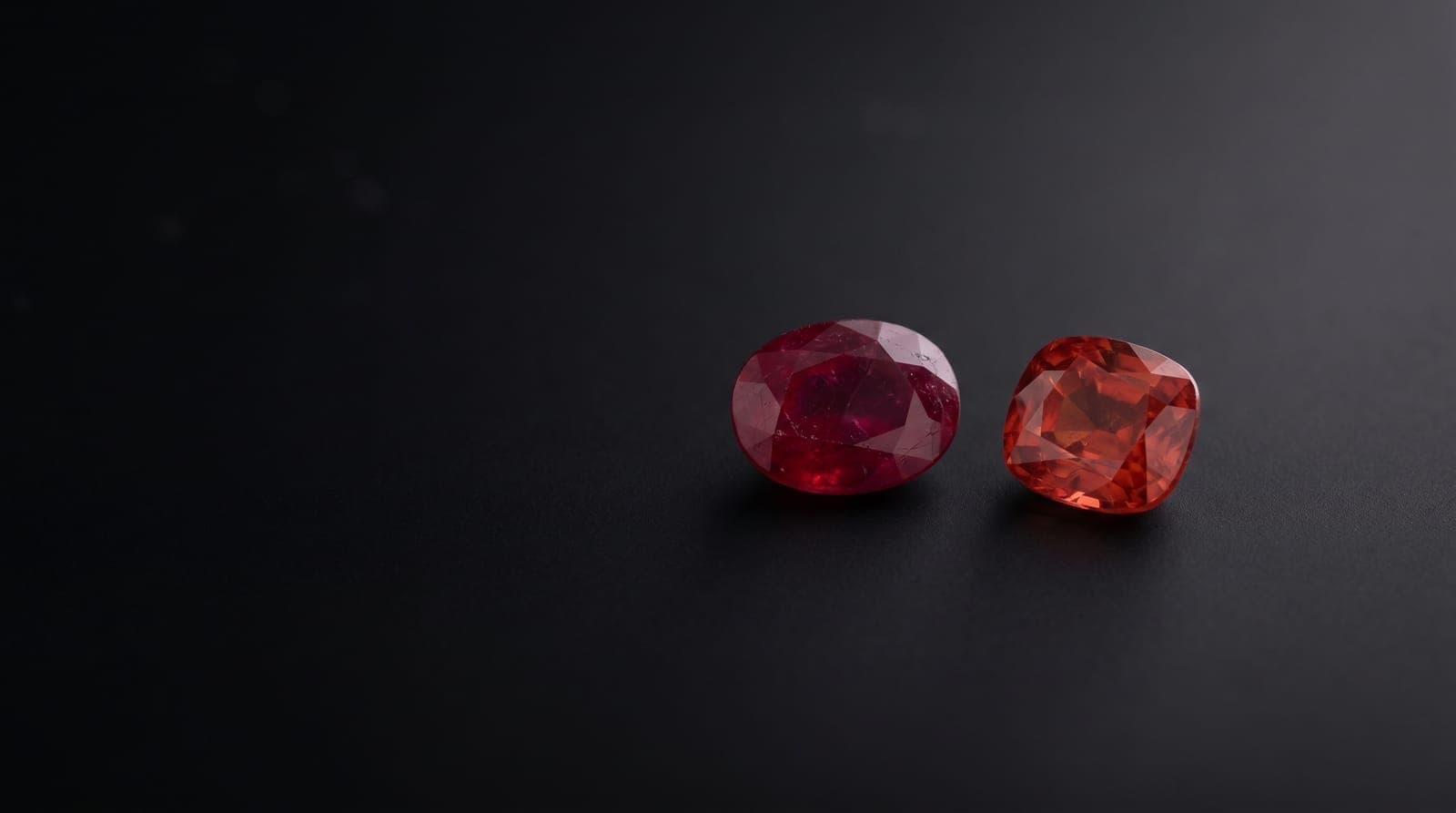
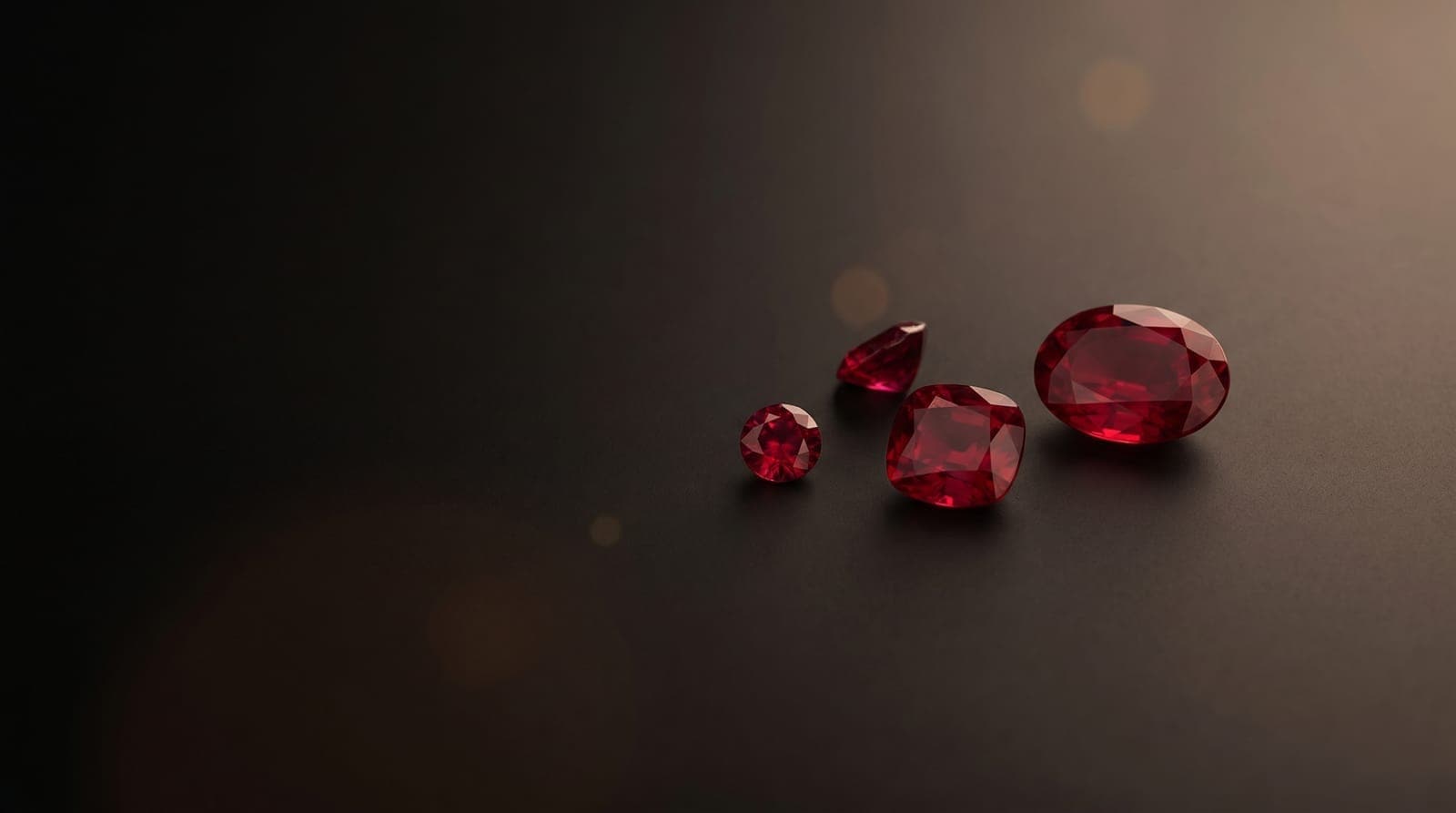
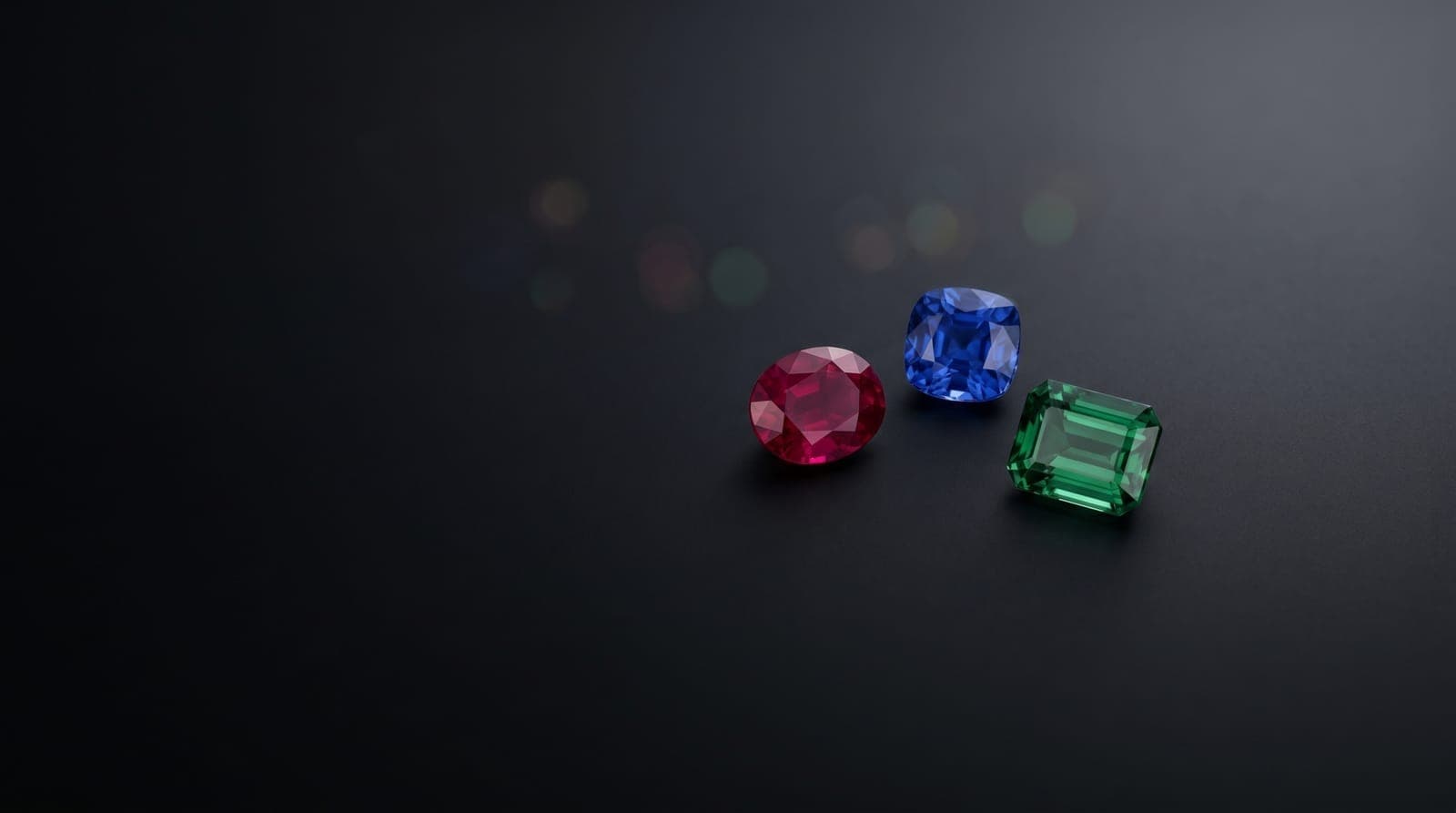
Hue — the dominant spectral color. For each gemstone type, specific hues command premium pricing. A "pigeon blood" red in rubies, a "cornflower" or "royal" blue in sapphires, and a "vivid green" in emeralds represent the top of their respective markets. Even slight shifts toward secondary hues (orangish-red vs. pure red, greenish-blue vs. pure blue) can reduce value by 30-50%.
Saturation — the intensity or purity of the color. Vivid saturation commands the highest prices. As saturation decreases toward grayish or brownish tones, value drops significantly. In the wholesale market, the jump from "strong" to "vivid" saturation can represent a 40-80% price increase.
Tone — how light or dark the stone appears. Each gemstone type has an optimal tone range where value peaks. Rubies are most valued at medium to medium-dark tones. Sapphires peak at medium tone. Stones that are too light appear washed out; stones that are too dark lose their color character.
For a detailed look at how color affects sapphire pricing specifically, see the grading sections of our sapphire buying guide and ruby buying guide. For per-carat ranges, see the sapphire price per carat guide and ruby price per carat guide.
2. Clarity (15-25% of Value)
Clarity in colored gemstones is assessed differently than in diamonds. The GIA classifies colored stones into three "type" categories based on the inclusions typically found in that species:
- Type I (typically inclusion-free): Aquamarine, topaz, tanzanite. Inclusions reduce value significantly.
- Type II (usually included): Sapphire, ruby, garnet, spinel. Minor inclusions are expected and accepted.
- Type III (almost always included): Emerald, tourmaline (red). Inclusions are part of the stone's character.
A "slightly included" sapphire (Type II) is priced as fine quality, while the same inclusion level in aquamarine (Type I) would be considered a significant flaw. Understanding these type distinctions prevents overpaying for unnecessary clarity in Type II/III stones and underpaying for genuinely clean Type I material.
3. Cut Quality (10-15% of Value)
Cut quality affects both the stone's visual beauty and its practical utility in jewelry manufacturing. Pricing reflects:
- Proportions: Well-proportioned stones that maximize brilliance command a premium over "native cut" stones that maximize carat weight at the expense of light performance.
- Symmetry: Visually centered culets, symmetrical facet patterns, and even girdle thickness all indicate quality cutting.
- Calibration: Stones cut to standard calibrated sizes carry a premium over uncalibrated goods — typically 10-20% — because they are immediately usable in production without recutting. See our detailed calibration guide and our guide to machine vs hand-cut gemstones for more.
- Finish: Polish quality and facet edge sharpness affect the stone's brilliance and are assessed as part of cut evaluation.
4. Carat Weight (Non-Linear Pricing)
Gemstone prices do not scale linearly with carat weight. Instead, prices jump at certain weight thresholds due to the rarity of larger rough material and the market demand for specific sizes.
Common price-per-carat thresholds for sapphires (as an example):
| Size Range | Typical Per-Carat Multiplier | Why |
|---|---|---|
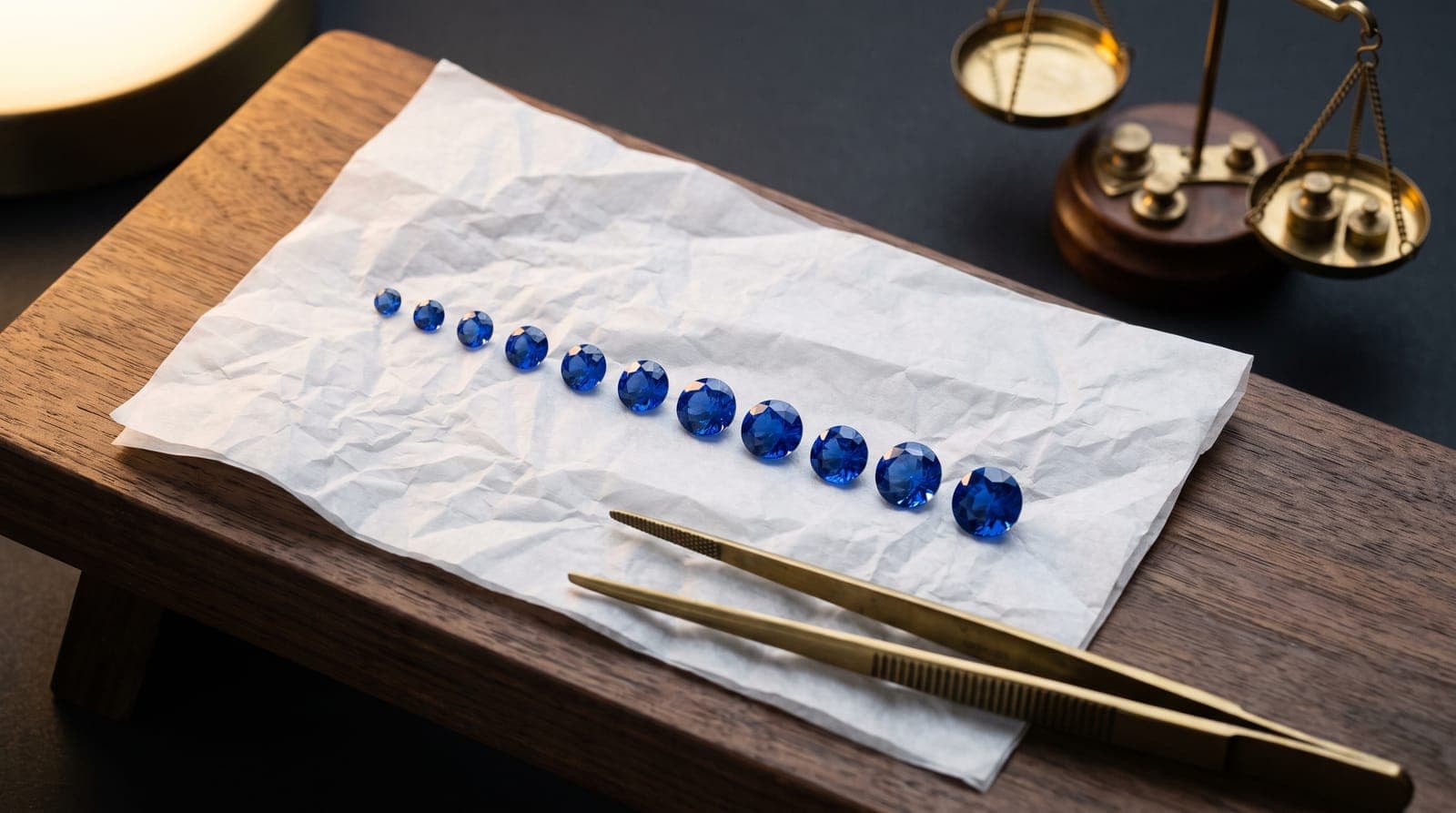
| Under 0.5 ct (melee) | 1x (base) | Abundant supply, machine-cuttable |
| 0.5 - 1.0 ct | 1.5-2x | Demand from engagement ring market |
| 1.0 - 2.0 ct | 2-4x | Sweet spot for fine jewelry |
| 2.0 - 3.0 ct | 4-7x | Significantly rarer rough material |
| 3.0 - 5.0 ct | 7-15x | Collector and high-jewelry demand |
| 5.0+ ct | 15-50x+ | Exceptional rarity, auction-level pricing |
This means a 2-carat sapphire does not cost twice as much as a 1-carat sapphire — it may cost four to eight times as much, per carat. Understanding these thresholds is essential for budgeting and for evaluating whether a supplier's pricing is reasonable.
Treatment Status and Its Price Impact
Treatment — any process applied to a gemstone after mining to improve its appearance — is the second most significant pricing factor after inherent quality. Treatment status can easily double or halve the price of an otherwise identical stone.
Heat Treatment (Standard Enhancement)
Heat treatment is the most common gemstone enhancement, applied to an estimated 90-95% of commercial sapphires and rubies. It is a permanent, stable treatment that improves color and clarity by dissolving silk inclusions and optimizing color saturation.
Price impact: Heated stones are priced at the baseline "market" level. Unheated stones of equivalent visual quality command a 30-100% premium, and significantly more at the top of the market. For fine unheated Burma rubies, the premium can exceed 200%.
For most B2B buyers producing commercial to mid-range jewelry, heated stones offer the best value-to-quality ratio. Reserve unheated stones for collections where the marketing value of "no heat" justifies the premium.
Other Treatments
- Lattice diffusion (beryllium treatment in sapphires): Produces vivid colors at low cost. Stones should be priced 50-70% below standard heated material.
- Glass filling (commonly in rubies): Dramatically improves appearance of heavily included material. Priced 80-90% below untreated equivalents. Not considered permanent — durability concerns during setting and cleaning.
- Oiling (emeralds): Industry-standard treatment. Minor oiling carries little price penalty; heavy oiling reduces price by 20-40%.
- Coating: Surface treatments that can wear off. Should be priced as fashion-grade material.
Always require treatment disclosure from your supplier. Undisclosed treatment is not just unethical — it is a business risk that can damage your reputation with downstream customers. Disclosure is one pillar of ethical colored gemstone sourcing.
Origin Premiums
Geographic origin affects pricing through both real quality differences and market perception.
Premium-Origin Stones
Certain origins command measurable premiums based on historical reputation and perceived quality:
- Burma (Myanmar) rubies: 30-100% premium over comparable non-Burmese material. The "pigeon blood" designation from a recognized lab on Burmese material represents the top of the market. Our Burmese vs Mozambique ruby guide explains the origin premium in detail. See our ruby page for current availability.
- Kashmir sapphires: 200-500%+ premium. Essentially a collector market — not relevant for most B2B production buyers.
- Ceylon (Sri Lanka) sapphires: 10-30% premium over Madagascar material of comparable quality. Justified by consistent bright, lively blue colors.
- Colombian emeralds: 20-50% premium over Zambian material of comparable quality, driven by the warm, slightly yellowish-green that the market traditionally values.
The Practical Reality for B2B Buyers
For most wholesale jewelry production, origin premiums represent marketing value rather than visible quality differences. A well-selected Madagascar sapphire parcel is often visually indistinguishable from Ceylon material at comparable grades — but priced 15-25% lower.
Our custom sourcing service helps buyers identify origin-quality combinations that deliver the best value for their specific market position. For a step-by-step guide to sourcing from Bangkok directly, see how to source gemstones from Thailand.
Volume Pricing and Lot Structures
B2B gemstone pricing typically follows volume-based tiers:
Per-Piece vs. Per-Carat vs. Per-Lot
- Per-carat pricing: Standard for individual stones above 0.5 carats. The industry convention for quoting and comparing prices.
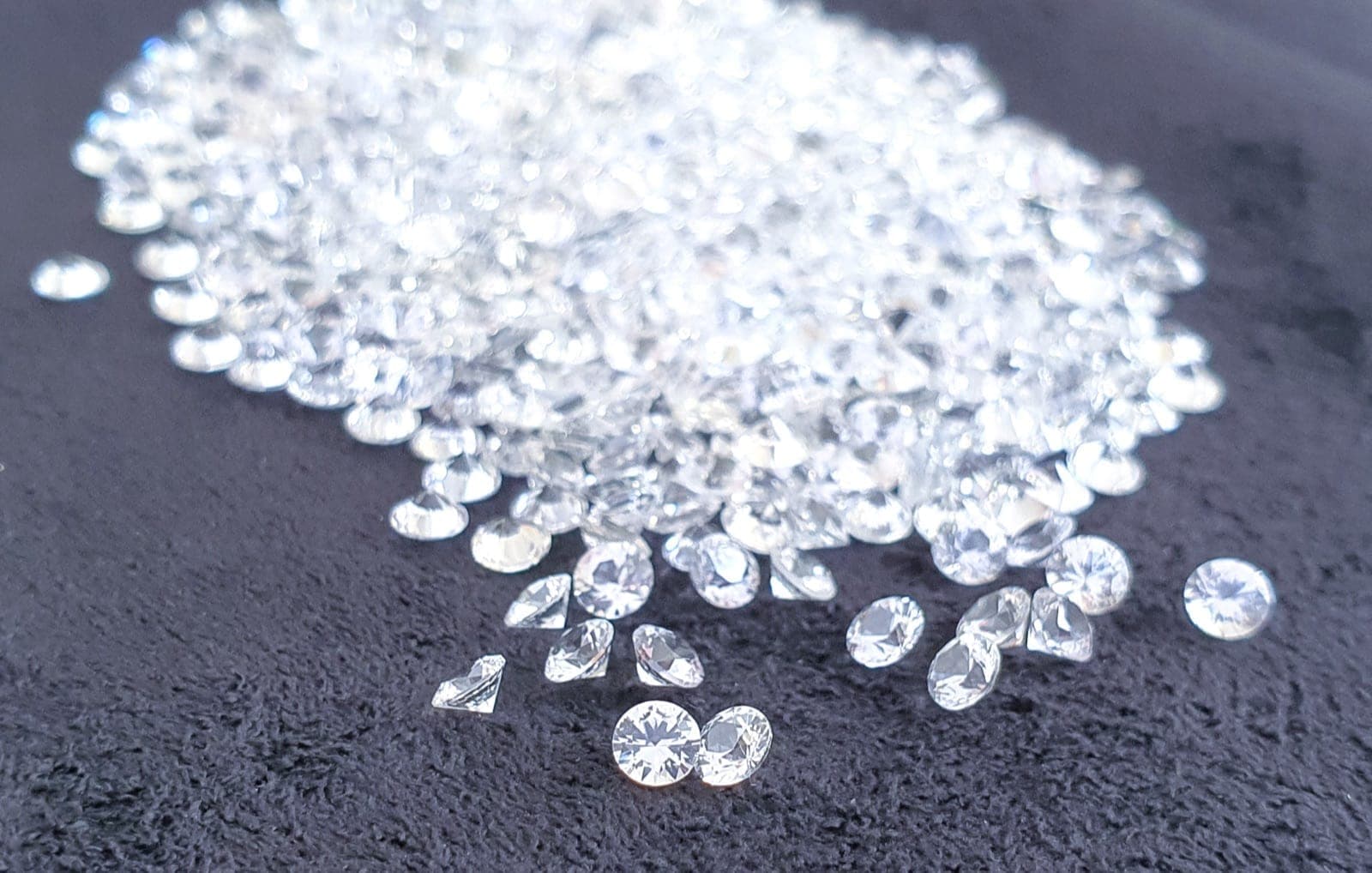
- Per-piece pricing: Common for calibrated melee (under 0.5 carats) and for standardized calibrated goods sold in parcels.
- Per-lot pricing: Used for mixed parcels where individual stone pricing is impractical. The buyer evaluates the lot as a whole.
Volume Discount Tiers
Typical volume discount structures in the wholesale market:
- Sample lot (10-50 pieces): Full price, sometimes with a surcharge for small-lot handling
- Standard order (50-200 pieces): Base wholesale pricing
- Volume order (200-1,000 pieces): 5-15% below base wholesale
- Production order (1,000+ pieces): 10-25% below base wholesale, subject to rough availability
- Annual contract: Best pricing, typically 15-30% below base wholesale, with agreed quality specifications and delivery schedule
These tiers vary by supplier and stone type. Rarer materials (fine rubies, emeralds) have shallower discount curves because the supplier's margin on rough cost is tighter. More abundant materials (commercial sapphires, garnets) offer deeper volume discounts.
Market Dynamics That Affect Pricing
Beyond the stone-level quality factors, several market forces influence wholesale pricing:
Rough Market Conditions
The gemstone supply chain starts at the mine. Major mining disruptions — political instability, seasonal flooding, new government regulations — can tighten rough supply and push prices upward with a 3-6 month lag. Conversely, new deposit discoveries (such as the sapphire deposits found in Madagascar and Sri Lanka in recent decades) can increase supply and moderate pricing.
Currency Effects
Most gemstone trading between source countries and cutting centers is conducted in US dollars. However, cutting costs are denominated in local currencies (Thai baht for Bangkok cutting operations). When the baht weakens against the dollar, Thai-cut stones become more competitively priced for international buyers.
Seasonal Demand
The jewelry industry has predictable demand cycles that affect gemstone pricing:
- January-March: Post-holiday restocking. Moderate demand, good negotiating window.
- April-June: Spring production for fall collections. Increasing demand.
- July-September: Peak ordering season for holiday production. Highest demand and firmest pricing.
- October-December: Holiday retail season. Wholesale demand slows as manufacturers focus on shipping finished goods.
Savvy B2B buyers place major orders during Q1 when demand is softest and suppliers are more flexible on pricing.
Evaluating a Supplier's Pricing
When comparing quotes from different suppliers, consider these factors beyond the per-carat or per-piece price:
What Is Included?
- Sorting and grading: Some suppliers include sorting to your specification; others charge separately.
- Calibration: Confirm whether the quoted price covers calibration to your tolerance or if precision calibration is an additional charge.
- Quality control: Is incoming inspection included, or will you need to sort the lot yourself?
- Shipping and insurance: International shipping of gemstones requires specialized insured courier services. Confirm whether this is included.
Hidden Costs to Watch For
- Minimum order surcharges: Small lots may carry a per-order handling fee.
- Custom calibration premiums: Non-standard sizes or tighter-than-standard tolerances add cost.
- Rush processing fees: Orders needed faster than standard lead time typically cost 10-20% more.
- Restocking or rejection fees: If you reject a lot, understand the terms before ordering.
The "Too Good to Be True" Test
If a price quote is 30%+ below comparable quotes from other reputable suppliers, investigate carefully. Common explanations for unusually low pricing:
- Undisclosed or understated treatment
- Lower quality than described (grading standards vary between suppliers)
- Synthetic or simulant material sold as natural
- Bait-and-switch — the approval lot looks different from the production lot
Working with established suppliers who have verifiable track records is the best protection against these risks.
Building a Pricing Framework for Your Business
For B2B buyers who purchase regularly, developing an internal pricing framework helps evaluate quotes quickly and negotiate effectively.
- Track your purchases: Record every order with stone type, quality grade, size, treatment, origin, quantity, and per-carat price paid.
- Build price-per-carat benchmarks: After 6-12 months of purchasing data, you will have reliable benchmarks for each category you buy regularly.
- Monitor market reports: Industry publications and trade show pricing provide general market direction, even if specific prices are not directly comparable.
- Maintain multiple supplier relationships: Having at least two qualified suppliers for each major category gives you pricing leverage and supply security.
Getting Started
If you are new to wholesale gemstone purchasing, start with a clear specification of what you need — stone type, size, quality grade, quantity, and budget range. Our services team can help you translate your jewelry designs into gemstone specifications and provide competitive quotes.
For established buyers looking to optimize their sourcing, our direct-from-Bangkok factory supply chain eliminates intermediary markups and gives you access to the same cutting and sorting infrastructure used by major international brands.
Request a quote to discuss your requirements and receive transparent, itemized pricing.