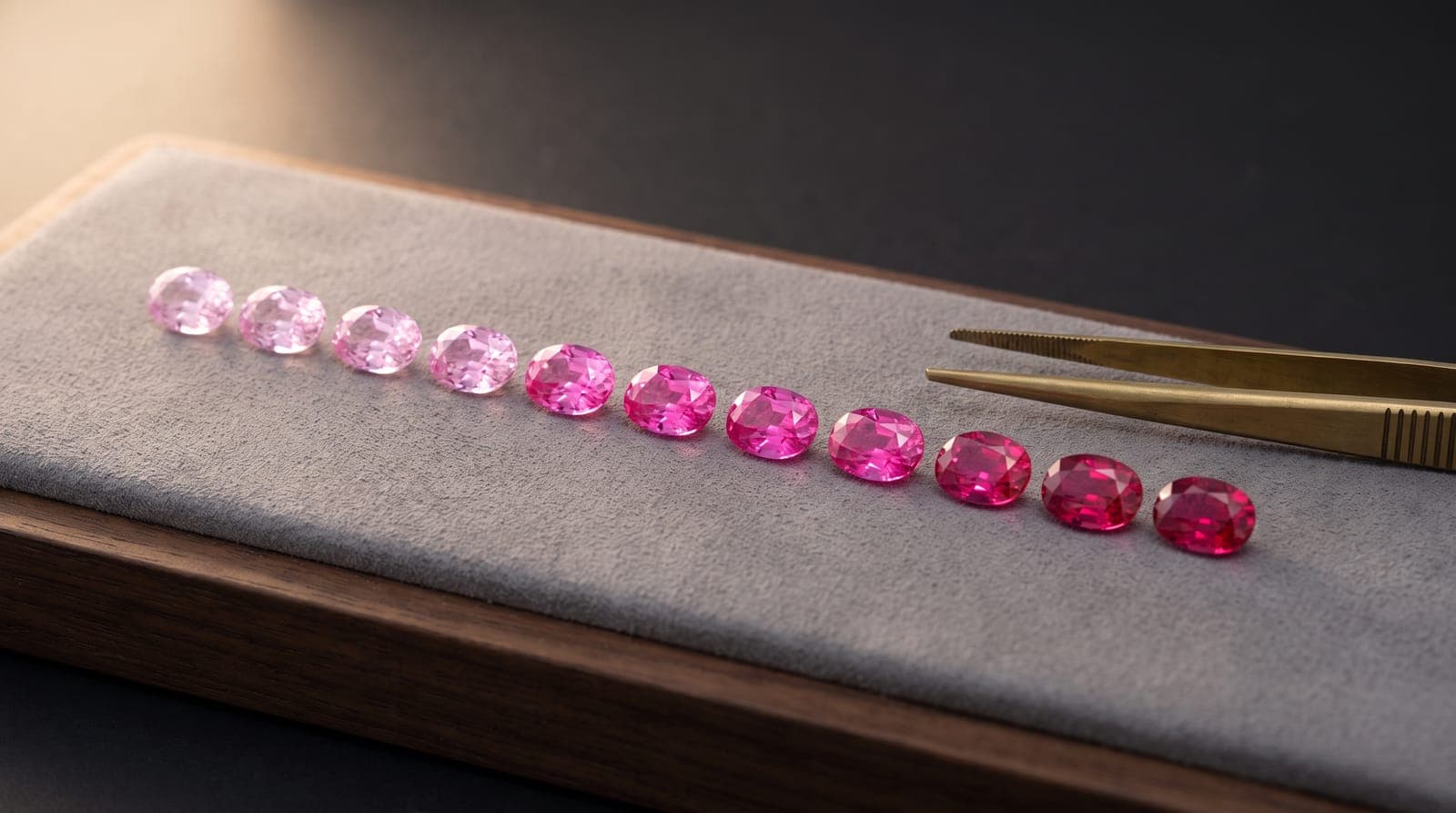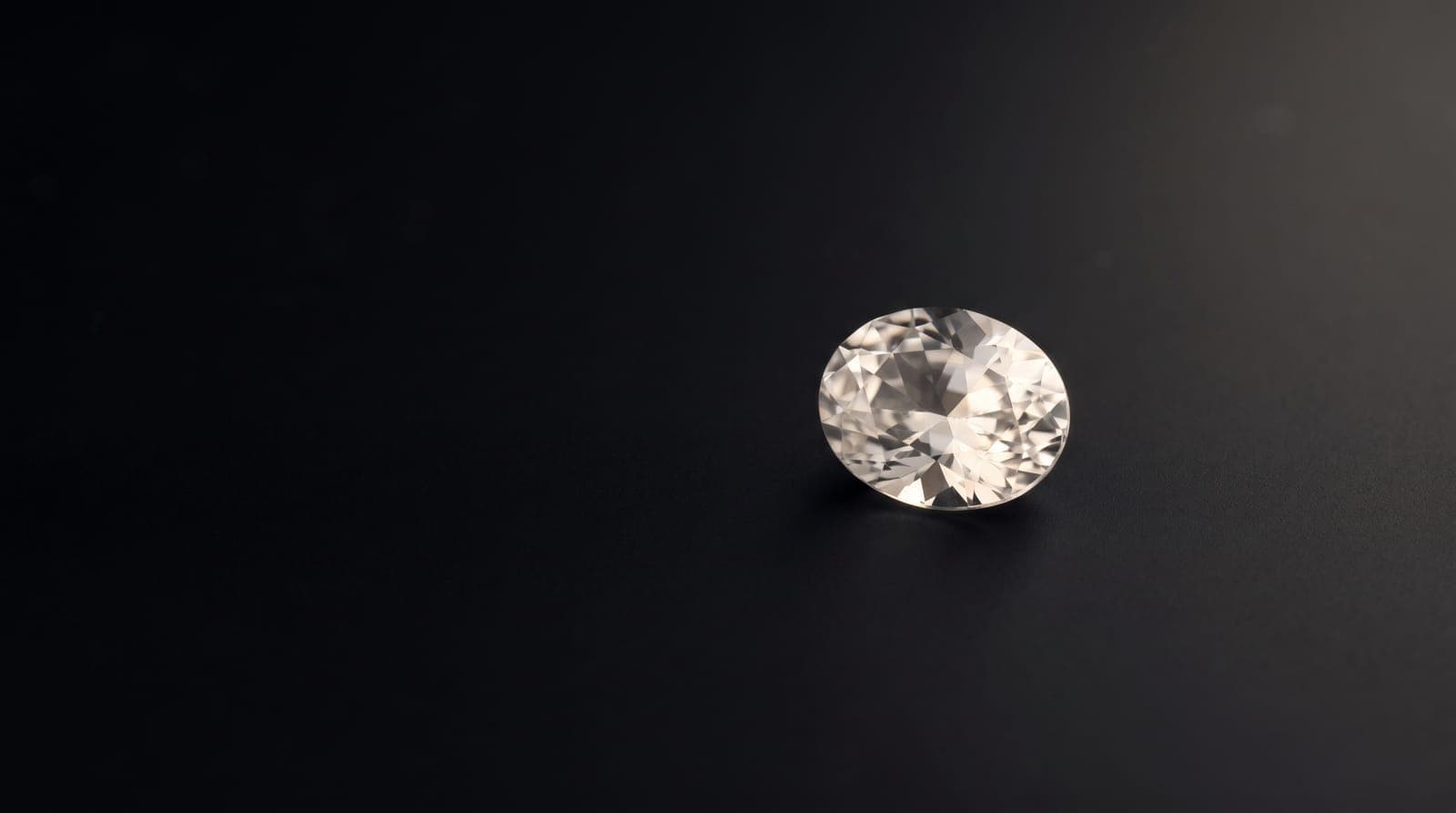
Understanding the Two Primary Gemstone Cutting Methods
The question of machine-cut versus hand-cut gemstones is one of the most common — and most misunderstood — topics in the wholesale gemstone trade. For B2B buyers sourcing calibrated stones for jewelry production, the cutting method directly affects cost, consistency, turnaround time, and ultimately, the quality of the finished jewelry piece. To understand why calibration tolerances matter so much in this context, our gemstone calibration guide covers the precision standards in detail.
Machine cutting (also called automated or CNC cutting) refers to the use of computer-controlled lapidary equipment that follows programmed cutting patterns to shape and facet gemstones. The operator loads rough material, inputs parameters, and the machine executes the cuts with mechanical precision.
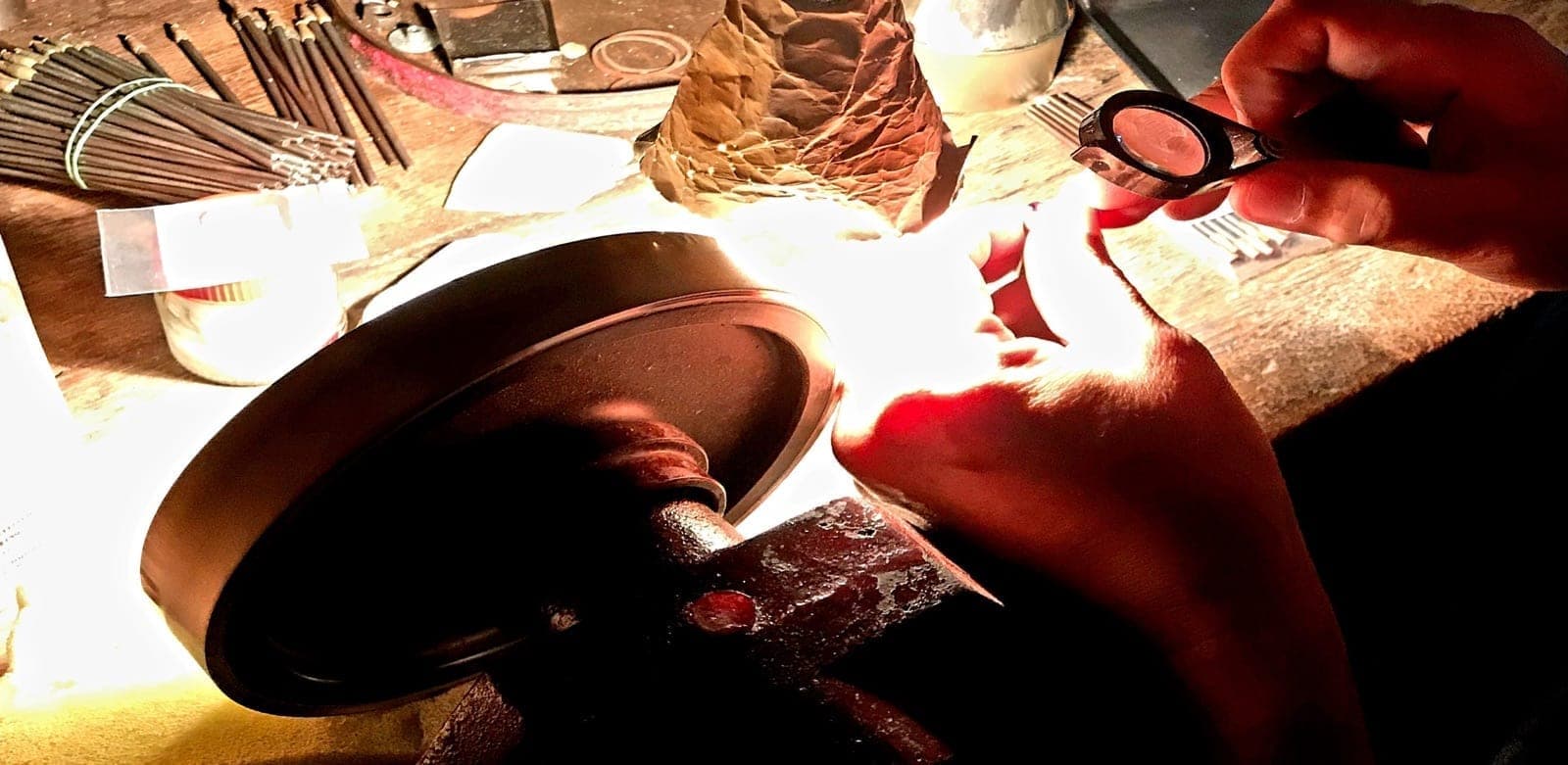
Hand cutting (also called manual or artisan cutting) involves a skilled lapidary craftsman who controls every facet angle, depth, and polish by hand on a traditional cutting wheel (or "jamb peg" / faceting machine with manual indexing). The cutter reads each piece of rough individually and makes real-time decisions about how to optimize yield, color, and brilliance.
Understanding when each method excels — and when a hybrid approach is the right call — can save your operation significant cost and improve the quality of your finished products.
Precision and Calibration Tolerances
Calibration tolerance is the measurement standard that determines whether a finished stone fits a specific setting size without modification. In jewelry manufacturing, even a 0.1mm deviation can cause production delays.
Machine-Cut Tolerances
Modern CNC gemstone cutting machines achieve remarkable consistency:
- Standard tolerance: +/- 0.05mm on diameter and depth
- Premium tolerance: +/- 0.03mm on critical dimensions
- Batch consistency: Less than 2% rejection rate on calibrated lots
These machines excel at producing thousands of identical stones. When you need 5,000 round 3.0mm sapphires that all measure exactly 3.0mm (+/- 0.05mm), a well-calibrated machine will deliver that with minimal waste and maximal speed.
Hand-Cut Tolerances
Skilled hand cutters working with modern faceting equipment can achieve:
- Standard tolerance: +/- 0.10mm on diameter and depth
- Expert tolerance: +/- 0.05mm (matching machine precision, but at slower speed)
- Batch consistency: 5-10% rejection rate, depending on material and cutter skill
Where hand cutting gains an advantage is in adaptive precision — the ability to adjust cutting angles in real time based on how the specific piece of rough responds. A hand cutter can see a developing inclusion, adjust the angle by half a degree, and save a stone that a machine would have ruined by following its rigid program.
| Factor | Machine Cut | Hand Cut |
|---|---|---|
| Calibration tolerance | +/- 0.05mm standard | +/- 0.10mm standard |
| Batch consistency | 98%+ conformance | 90-95% conformance |
| Adaptation to rough | Limited, follows program | High, real-time adjustment |
| Complex custom shapes | Software-dependent | Fully flexible |
| Speed per stone | 2-5 minutes | 15-60 minutes |
Cost Considerations for Wholesale Buyers
Cost per stone varies significantly based on the cutting method, volume, complexity, and material being cut. Here is a realistic breakdown for B2B buyers:
Machine Cutting Economics
Machine cutting delivers the best per-unit cost when three conditions are met: the order is large (typically 200+ pieces), the shape is standard (round, oval, cushion, emerald cut), and the rough material is relatively predictable in quality.
Cost advantages of machine cutting:
- Labor: One operator can oversee multiple machines simultaneously, spreading labor cost across hundreds of stones per shift.
- Throughput: A single machine can produce 50-200 calibrated stones per 8-hour shift, depending on size and complexity.
- Waste reduction: Programmed cutting paths optimize rough utilization based on standard yield calculations.
- Consistency: Low rejection rates mean less material wasted on stones that do not meet specification.
The capital investment in CNC cutting equipment is substantial — a professional-grade gemstone cutting system runs $30,000-$150,000 — but the per-unit cost drops dramatically at volume.
Hand Cutting Economics
Hand cutting is more cost-effective in specific scenarios:
- Custom or unusual shapes: Programming a machine for a one-off shape is not economical. A hand cutter can execute a custom design from a drawing in a single session.
- Small lots: For orders under 50 pieces, the setup time for machine cutting erodes the cost advantage.
- Premium material: When cutting high-value rough (fine rubies, emeralds, or large sapphires), the ability to maximize yield and optimize color face-up can add thousands of dollars of value per stone — far exceeding the additional labor cost.
- Repair and recutting: Chipped or poorly cut stones that need individual attention are always hand-work.
In Bangkok's cutting district, a skilled hand cutter typically processes 15-40 calibrated stones per day, with costs per stone ranging from $1-15 depending on complexity and material hardness.
Quality and Brilliance
This is where the debate gets nuanced. A common assumption is that hand-cut stones always look better — that the "human touch" produces superior brilliance. The reality is more complex.
When Machine Cut Looks Better
For standard shapes with well-established optimal facet angles (rounds, ovals, and standard cushions), machine cutting can actually produce more consistent brilliance across a lot. The reason is simple: machines do not get tired, distracted, or vary their pressure. Every facet meets at exactly the programmed angle.
In a lot of 1,000 machine-cut round sapphires, the light performance will be remarkably uniform. This consistency is valuable for jewelry manufacturers who need every piece in a line to look identical.
When Hand Cut Looks Better
Hand cutting excels when the rough material requires individual interpretation. Consider these scenarios:
- Color optimization: A skilled cutter reads the rough and orients the table facet to present the best color face-up. Machine programs use standard orientations that may miss the optimal color angle for a specific piece.
- Inclusion avoidance: A hand cutter can see a developing inclusion during the cutting process and adjust the facet placement to position it under a bezel or prong, hiding it in the final setting.
- Windowing correction: When rough material has a tendency to create "windows" (transparent see-through areas), a hand cutter adjusts pavilion angles in real time to close the window and maximize light return.
- Artistic cuts: Fantasy cuts, concave faceting, and proprietary designer cuts require the creativity and adaptability that only a human cutter can provide.
Turnaround Time
For production planning, turnaround time often matters as much as cost:
- Machine cutting: 500-piece calibrated lot in a standard shape typically ships within 5-7 business days from rough allocation.
- Hand cutting: The same 500-piece lot takes 2-4 weeks with a team of cutters working in parallel.
- Hybrid approach: 7-10 business days, with machine preforming followed by hand finishing.
Rush orders amplify these differences. Machine capacity can often be scaled by running additional shifts, while hand cutting capacity is limited by the number of available skilled cutters.
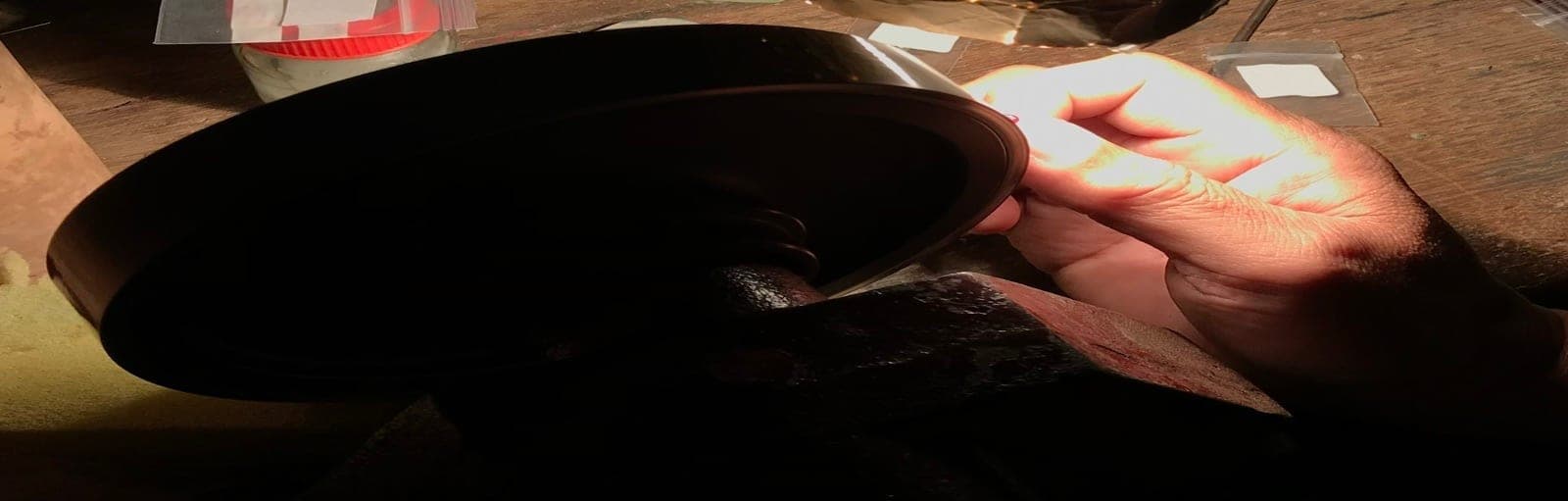
The Hybrid Approach: Best of Both Worlds
The most sophisticated cutting operations — including our precision cutting facility in Bangkok — use a hybrid approach that leverages the strengths of both methods:
- Rough assessment: Each piece of rough is evaluated by an experienced gemologist who determines the optimal cutting plan.
- Machine preforming: CNC equipment cuts the initial shape and brings the stone to approximate calibrated dimensions.
- Hand finishing: Skilled cutters fine-tune facet angles, optimize brilliance, and bring each stone to final calibrated specification.
- Quality control: Every stone is measured and visually inspected against the order specification.
This hybrid workflow delivers machine-level calibration consistency with hand-cut-level brilliance optimization. It also allows the facility to handle both high-volume standard orders and smaller custom requests efficiently.
Which Method Should You Choose?
The right cutting method depends on your specific requirements. Here is a decision framework for B2B buyers:
Choose machine cutting when:
- You need 200+ pieces of a standard shape and size
- Calibration consistency is the top priority
- Budget is fixed and cost-per-stone must be minimized
- The rough material is commercial-grade and predictable
Choose hand cutting when:
- You need custom or non-standard shapes
- The order is under 50 pieces
- You are cutting premium rough where yield optimization adds significant value
- Individual stone quality matters more than batch uniformity
Choose a hybrid approach when:
- You need calibration consistency AND optimized brilliance
- Your order size is 50-500 pieces
- The material is mid-to-high quality and deserves individual finishing
- You have 7-10 days of lead time available
At Lim Gems Factory, our cutting services accommodate all three approaches. Whether you need 10,000 machine-calibrated melee stones or 25 hand-cut custom ovals, we match the cutting method to your specification and budget. You can learn more about our Bangkok facility or contact us to discuss your specific cutting requirements.
Material Considerations
Not all gemstone materials respond equally well to machine and hand cutting:
- Sapphires and rubies (corundum, Mohs 9): Excellent candidates for machine cutting due to consistent hardness. Hand finishing adds value on premium material.
- Emeralds (beryl, Mohs 7.5-8): Inclusions and fractures make machine cutting riskier. Hand cutting with real-time adaptation is often preferred.
- Tourmaline: Variable hardness along crystal axes makes hand cutting advisable for premium material.
- Garnets: Uniform hardness and predictable rough make them ideal machine-cutting candidates.
- Spinels: Respond well to both methods. Machine cutting is excellent for calibrated melee.
For a deeper look at how these considerations affect specific stone types, explore our sapphire and ruby collections.
Questions to Ask Your Supplier
When evaluating a cutting supplier — or requesting a quote from our custom sourcing team — ask these questions:
- What cutting equipment do you use? (Brand and model indicate capability.)
- Do you offer hand finishing on machine-preformed stones?
- What is your standard calibration tolerance, and can you tighten it?
- What is the typical rejection rate on calibrated lots?
- Can I receive a sample lot before committing to a full order?
The best suppliers are transparent about their methods and welcome these questions. A supplier who claims "all hand-cut" but delivers thousands of calibrated stones in a week is likely using machines — and there is nothing wrong with that, as long as they are honest about it.
Making the Right Decision for Your Business
The machine-cut versus hand-cut debate is not about one method being universally "better." It is about matching the cutting method to the specific requirements of each order — stone type, volume, quality grade, timeline, and budget.
Work with a supplier who has both capabilities in-house, so you get an honest recommendation rather than a sales pitch for the only method they offer. Understanding how gemstone pricing works will help you evaluate cutting cost estimates from any supplier with confidence.
Request a quote from our cutting facility to discuss which approach best fits your next order.