Pink Sapphire: Corundum's Fastest-Growing Color
Pink sapphire demand has climbed steadily as designers and manufacturers look for a romantic, durable colored stone that does not carry fine-ruby pricing. For B2B buyers, that makes pink sapphire both an opportunity and a grading challenge — because the line between "pink sapphire" and "ruby" is a matter of degree, not kind.
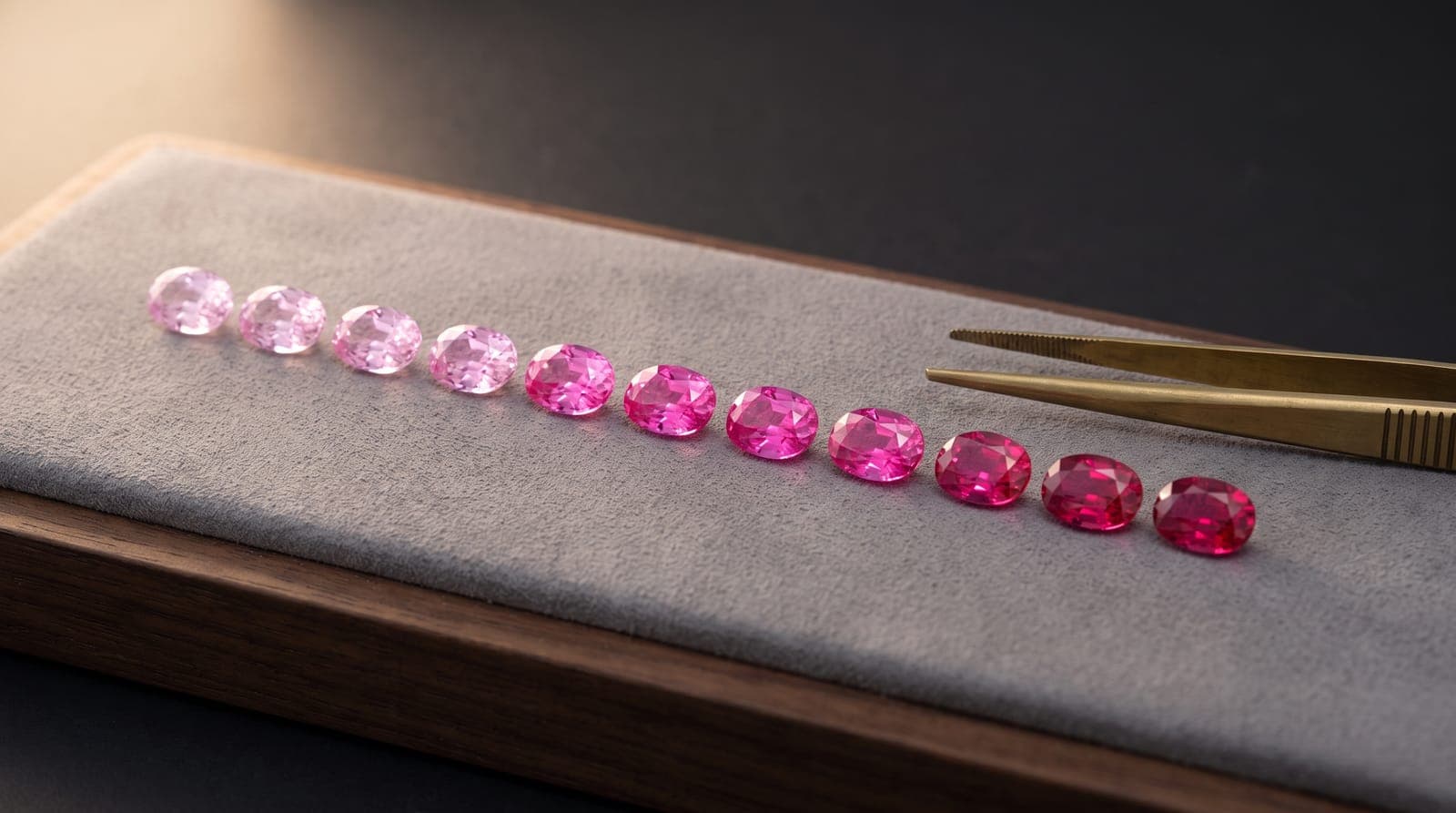
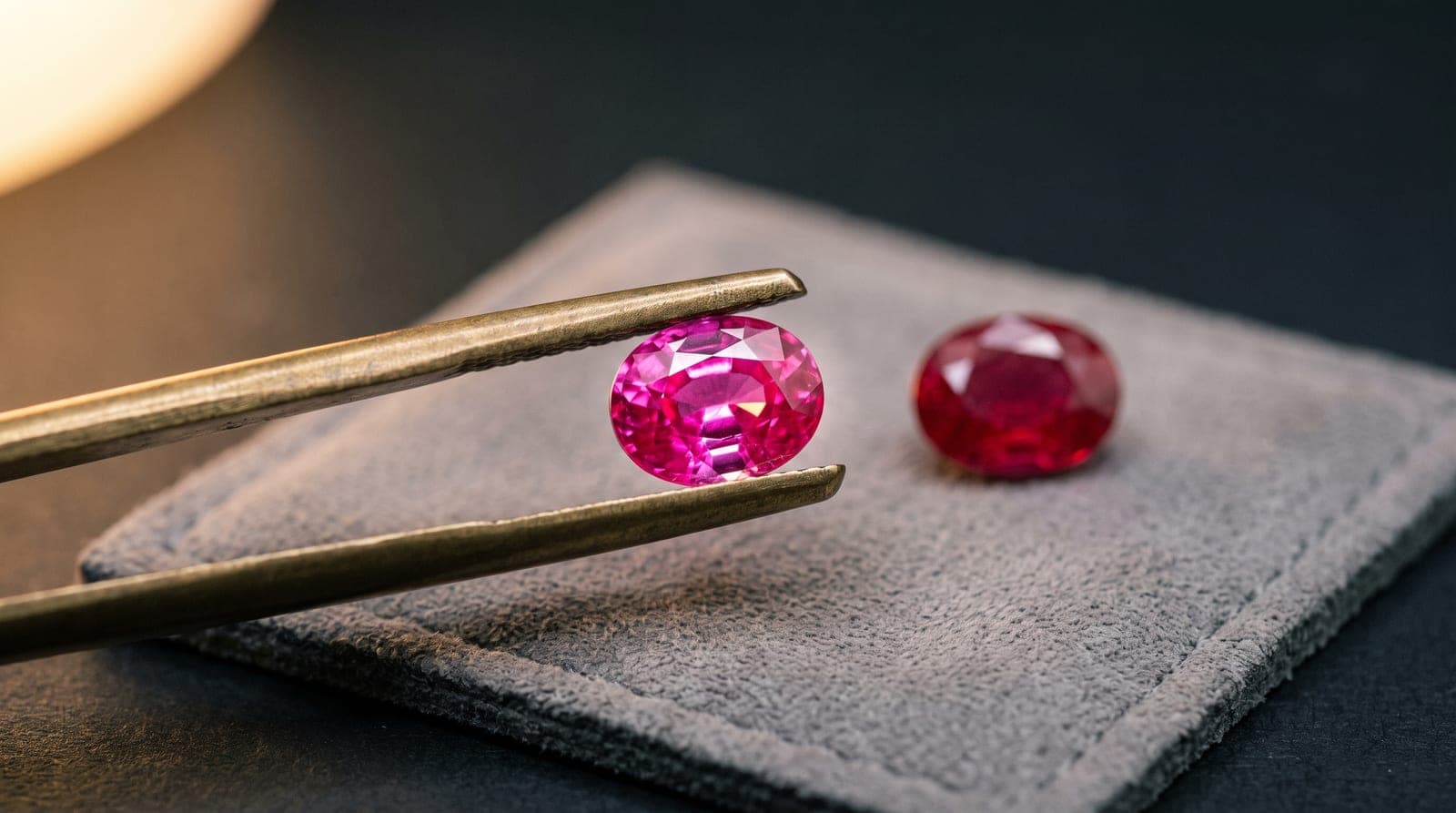
A pink sapphire is defined as a pink, gem-quality variety of corundum colored by chromium — the same element that makes rubies red. When the chromium-driven color is saturated enough to read as true red, the stone is graded a ruby; lighter or less-saturated reds are graded as pink sapphire. Everything about buying pink sapphire follows from that boundary.
This guide covers how to grade pink sapphires, where the ruby boundary sits, treatment and origin considerations, and how to source consistent parcels. For the fancy-color cousin, see padparadscha vs pink sapphire; for the broader color framework and full evaluation workflow, our sapphire buying guide.
Grading Pink Sapphire by Color
As with all sapphire, color leads value. Evaluate three dimensions:
| Hue | Pure pink is most desirable. Purplish-pink is common and acceptable; brownish or grayish modifiers reduce value. A slight orange push moves toward padparadscha territory. |
| Saturation | Vivid, saturated 'hot pink' commands the strongest prices. Pale, washed-out stones are commercial goods. |
| Tone | Medium tone shows color best; too light reads weak, too dark muddies the pink. |
After color, judge clarity as a Type II stone (some inclusions expected), then cut and size. As with other corundum, price per carat rises with size at equal quality.
The Pink-vs-Ruby Boundary
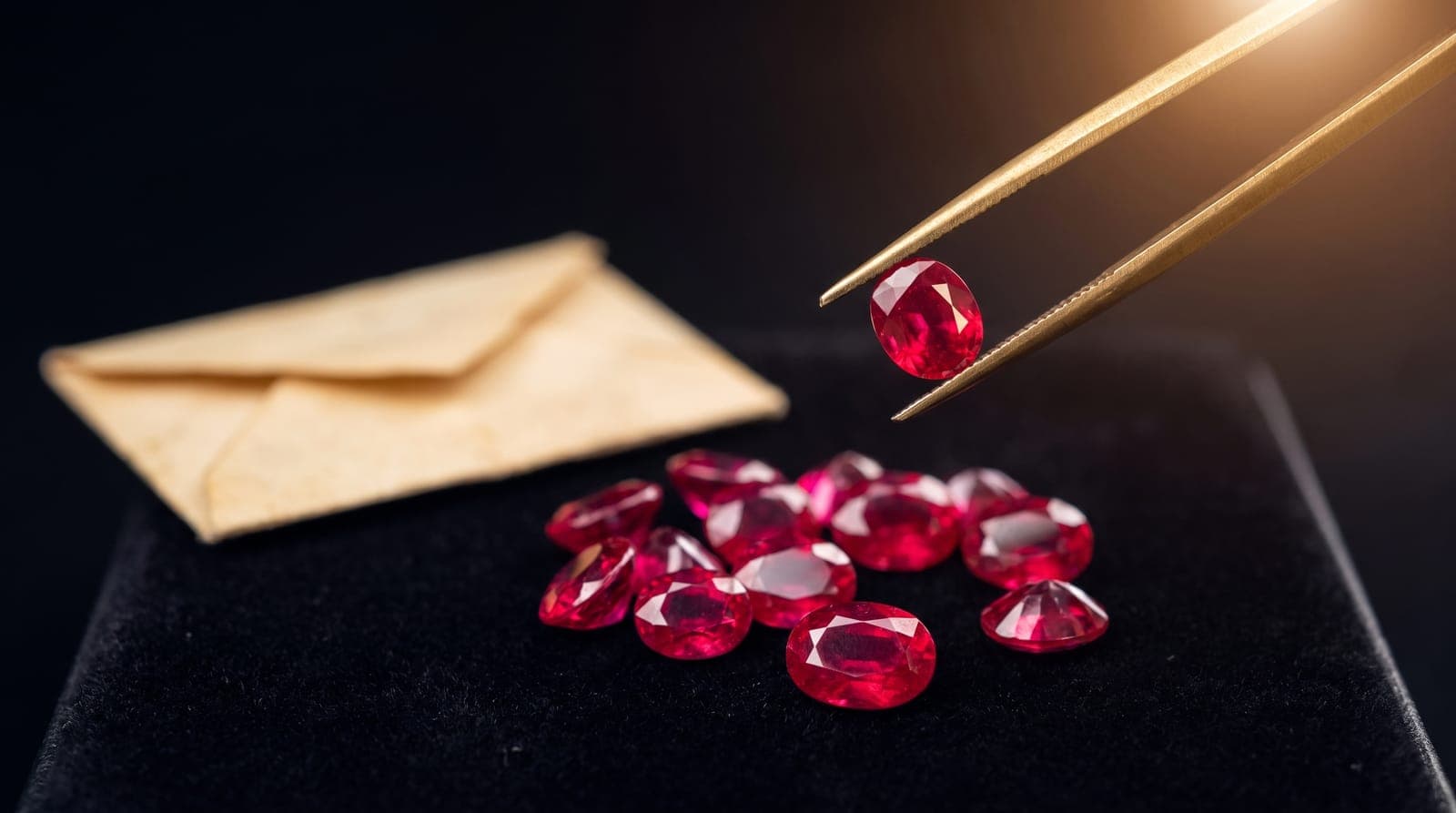
The single most important concept for buyers: pink sapphire and ruby are the same species, separated only by how saturated the red is. The threshold is a judgment that can vary between laboratories, so the same stone can occasionally be graded differently by two labs — and a "ruby" call carries a large price premium over "pink sapphire." This is why, for stones near the boundary, the lab and its report wording matter enormously. The color-grading section of our ruby buying guide explains the red-saturation side, and how to read a gemstone lab report shows how to verify the call.
Treatment and Origin
Most pink sapphires are heat-treated, like their blue counterparts; unheated fine-color stones command a premium and should be lab-confirmed. Be alert to beryllium/lattice diffusion, used on some pink and orange-pink corundum to alter color — it must always be disclosed and is priced well below natural or simply heated material. See our sapphire heat treatment guide for the treatment hierarchy.
On origin, Ceylon (Sri Lanka) and Madagascar are the principal sources of fine pink sapphire. As always, treat a laboratory origin call as an opinion rather than a guarantee.
Why Buyers Choose Pink Sapphire
Pink sapphire lets a manufacturer deliver a pink-to-red look with corundum's 9-on-Mohs hardness and brilliance, at a price point below fine ruby — ideal for engagement rings and colored-stone collections aimed at the romance market. It sits naturally alongside ruby in a line: the ruby for the top tier, pink sapphire for accessible price points. For how the two compare on price, see the sapphire price per carat guide.
Sourcing Consistent Pink Sapphire
For production, color consistency across the parcel is the hard part — pink reads differently across even small saturation shifts, so a matched lot matters more than any single stone. Confirm calibration tolerance (we cut to ±0.1mm), treatment disclosure, and certification level before ordering, and pair this with the sapphire buying guide for the full evaluation workflow. Browse current wholesale sapphires when you are ready to source.