Buying Rubies at Wholesale Is a Different Discipline
Sourcing rubies for production is not the same as buying a single stone. When you are ordering parcels for a jewelry line, consistency across the lot, honest treatment disclosure, and predictable calibration matter as much as the quality of any individual gem. This guide walks B2B buyers through everything to evaluate before placing a ruby order. (For the sapphire equivalent, see our sapphire buying guide.)
A ruby is defined as the red, gem-quality variety of the mineral corundum (aluminum oxide), colored by chromium, and the second-hardest natural gemstone after diamond. Everything that follows — color, treatment, origin, price — flows from that definition.
Color: The Dominant Value Driver
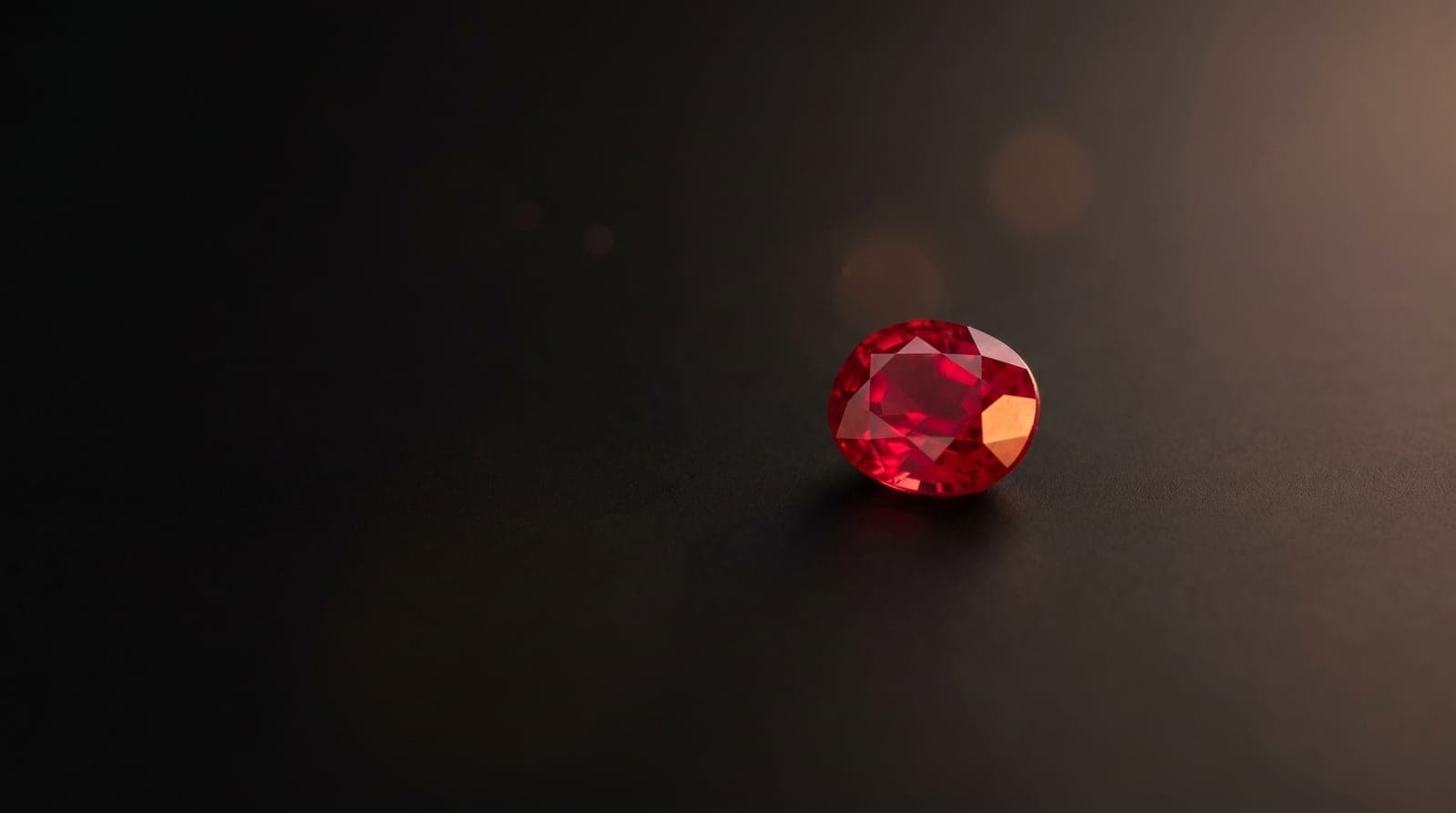
Ruby value is led by color more than any other factor — ahead of treatment, clarity, cut, and origin. The ideal is a vivid, pure-to-slightly-purplish red with strong saturation and medium-to-medium-dark tone, the trade's "pigeon blood" standard (what that designation really means). Graders break color into three dimensions:
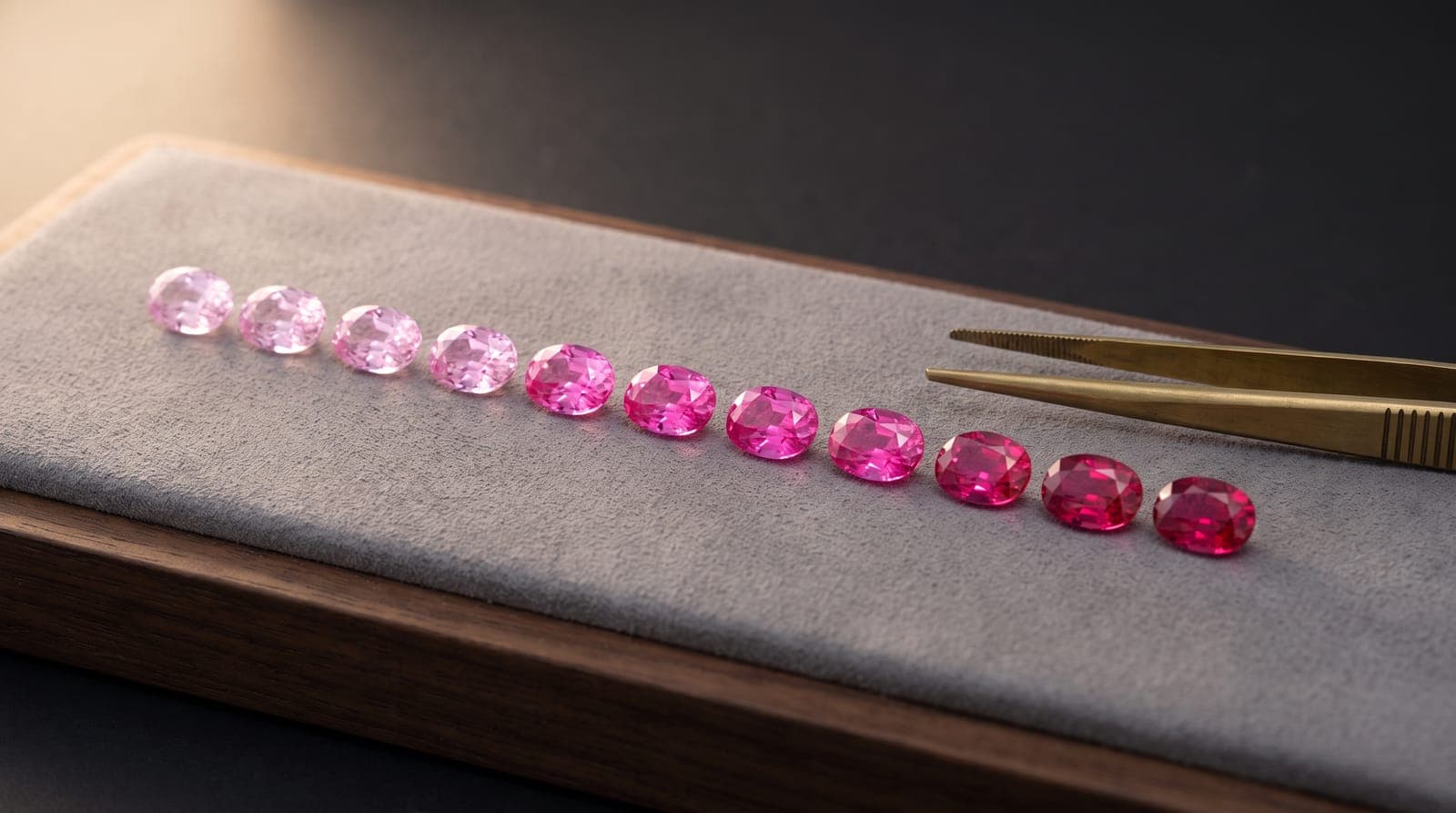
- Hue — the dominant color and its modifiers. Pure red is the target; a trace of blue/purple is characteristic of the finest stones, while strong purple, orange, or brown modifiers pull value down. At the light, weakly saturated end, the line between ruby and pink sapphire is drawn differently by different labs and markets.
- Saturation — the intensity of the color, from grayish/brownish through moderate and strong to vivid. It is the single biggest sub-factor in ruby valuation; brownish or grayish masking is what turns a fine stone into a commercial one.
- Tone — how light or dark the stone appears. Medium to medium-dark lets the color show at full saturation; too light and the stone reads pink, too dark and it turns blackish-red and loses life.
How graders combine hue, saturation, and tone. Terminology varies by lab — GRS popularised commercial color types such as 'Pigeon's Blood'; other reports describe color in hue, tone, and saturation terms.
| Color grade | Hue | Saturation | Tone | Where it sells |
|---|---|---|---|---|
| Pigeon blood / vivid red | Pure red, trace of blue | Vivid | Medium-dark | Top of market; lab-designated |
| Fine red | Red, slight secondary | Strong to vivid | Medium | Fine jewelry |
| Good red | Red, noticeable modifier | Moderate to strong | Medium | Mid-range lines |
| Commercial red | Red, strong modifier | Moderate | Variable | Volume production |
| Low commercial | Strongly modified red | Weak to moderate | Too light or dark | Fashion jewelry |
Always evaluate under daylight-equivalent (D65) lighting, and check stones under warm light too: incandescent light flatters rubies, fluorescent light can make them look darker and flatter, and your customer will see both.
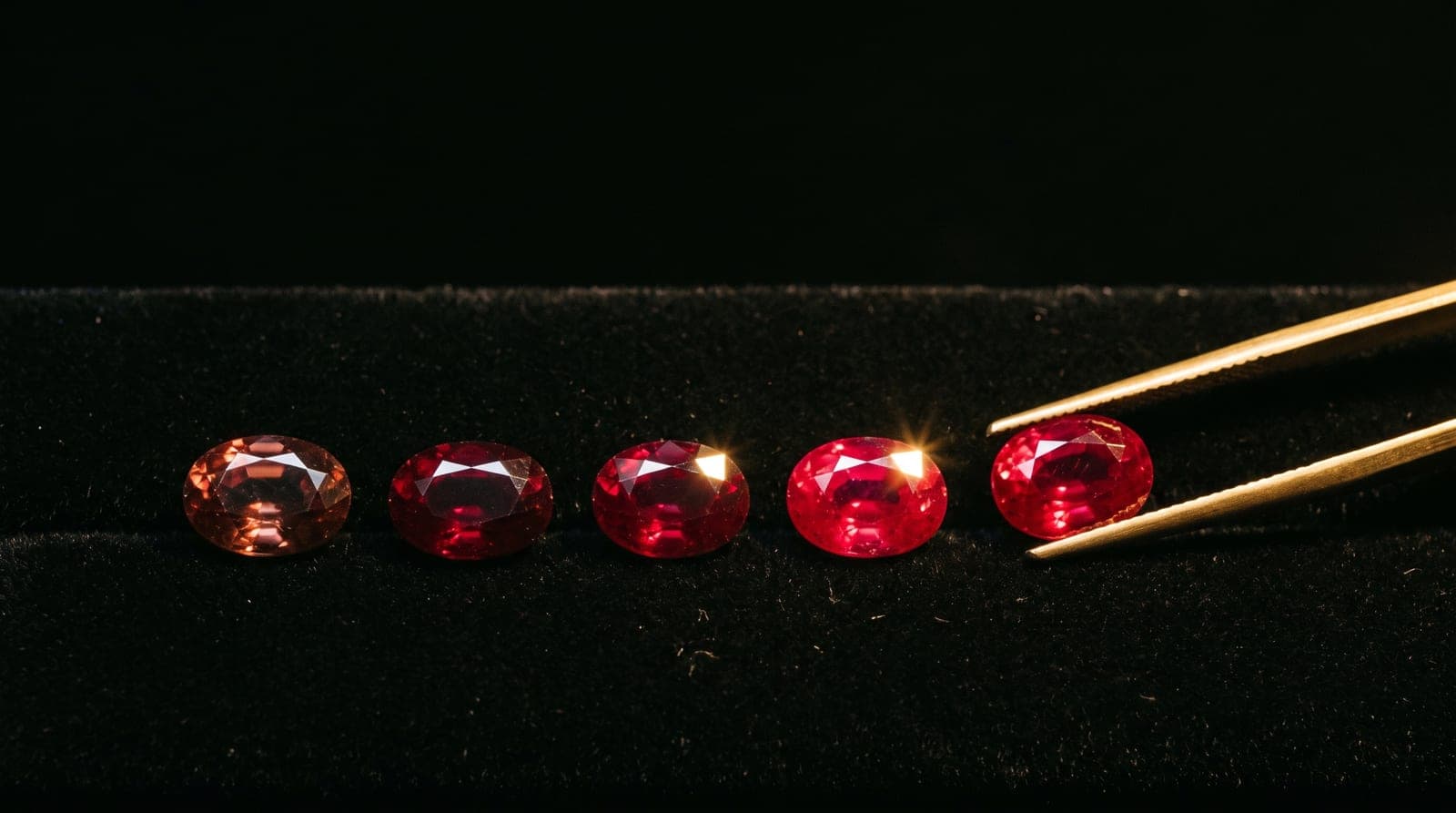
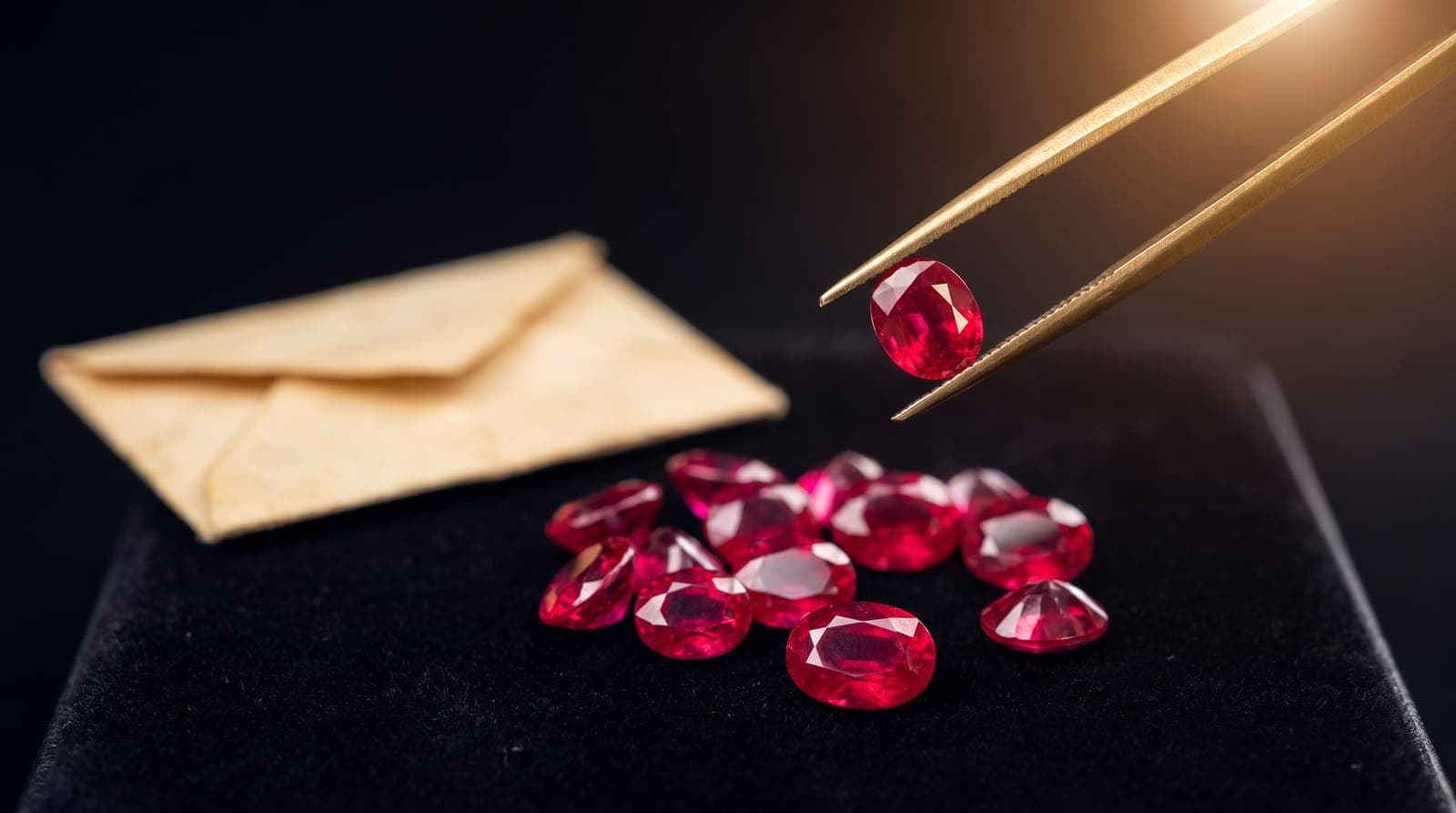
For parcels, evaluate color consistency across the lot, not just the best stone — a production run needs stones that match.
Clarity: Judge Rubies as Type II Stones
Rubies are Type II gemstones: inclusions are expected and accepted. Judging a ruby by diamond clarity standards leads to overpaying for unnecessary cleanliness or rejecting perfectly commercial goods. On the colored-stone clarity scale used for Type II stones like ruby, VVS and VS stones are usually eye-clean; SI1 and SI2 have inclusions you can notice without magnification, which is common and often acceptable in commercial goods; I1–I3 have obvious inclusions that can affect beauty or durability. Eye-clean fine-color rubies are rare and priced accordingly; a flawless-looking ruby with no inclusions at all should prompt a check for synthetic origin.
Not all inclusions count against a stone equally:
- Usually acceptable: fine silk (rutile needles) in moderate density — it softens light and is prized in fine Burmese material; small enclosed crystals not visible face-up; growth or color zoning seen only under magnification.
- Problematic: surface-reaching fractures (a durability risk, especially in rings); large dark crystals visible face-up; heavy silk that makes the stone cloudy or "sleepy"; open cavities.
Judge inclusions face-up, the way the end customer sees the stone — a skilled cutter orients inclusions away from the table, which is why rough evaluation is one of the most valuable skills in the ruby trade.
Color vs Clarity: Which Matters More?
When you must choose, color wins. In wholesale trading, a ruby with strong-to-vivid color and SI clarity consistently outsells and outprices a cleaner ruby with moderate, brownish color. As an illustration, two 2-carat heated rubies:
- Stone A: near-vivid red, SI1 with minor silk.
- Stone B: moderate red with a brownish modifier, VS with only pinpoints under 10x.
Stone A will typically price at several times Stone B per carat, despite the lower clarity grade — the color carries most of the value.
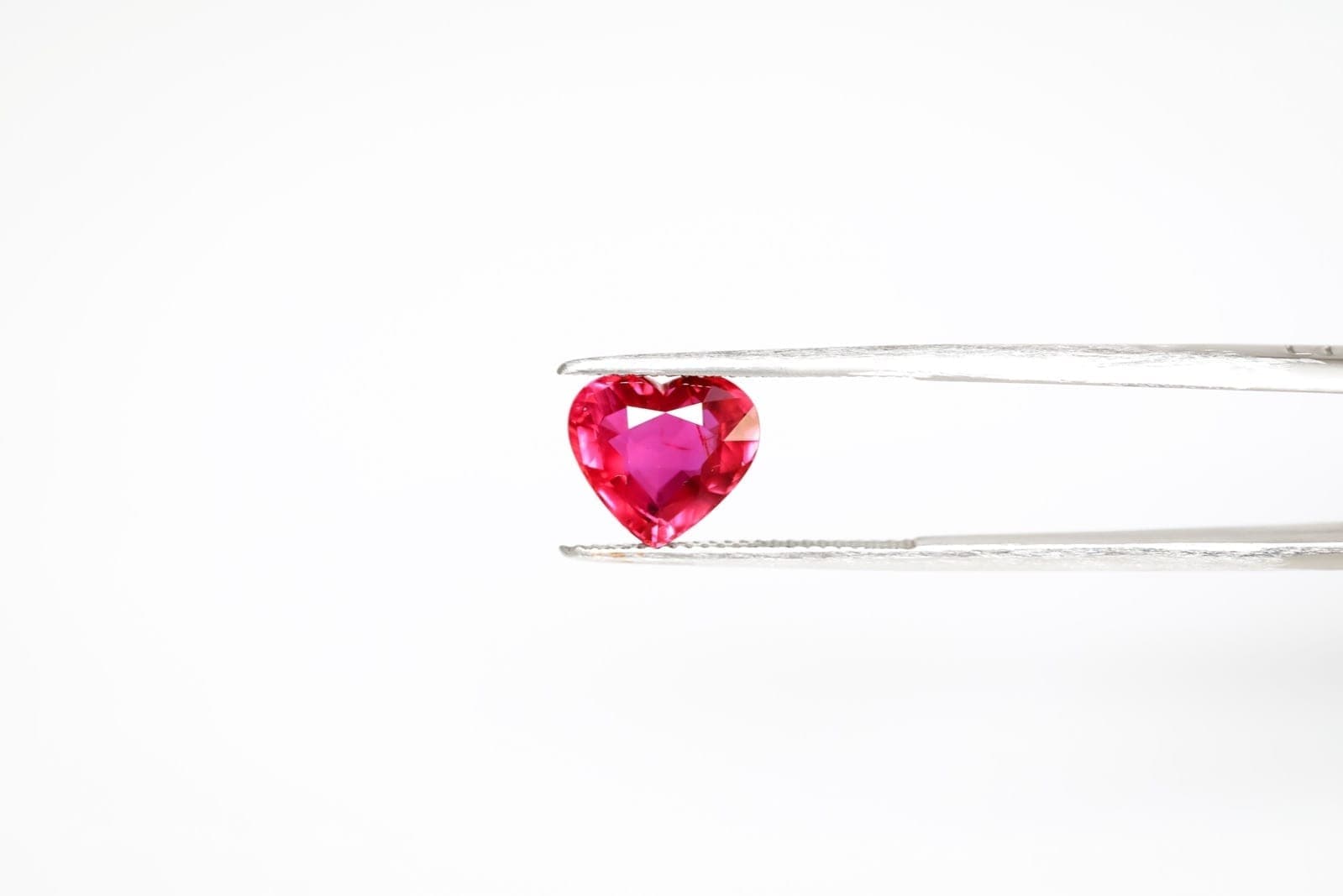
The exception is the very top of the market: for large, high-value stones, buyers expect both top color and eye-clean clarity, and a visible inclusion that is acceptable at 1 carat becomes a real value reducer at 5 carats. How to set your priorities by segment:
- Fine jewelry and statement pieces: strong-to-vivid saturation, pure red; eye-clean (typically VS or better).
- Mid-range manufacturing: strong saturation with acceptable modifiers; minor visible inclusions acceptable; consistent color across parcels.
- Calibrated goods and melee: lot-wide color consistency over individual grades; clarity suited to the setting (bezels forgive more than prongs).
- Collection and investment: top color and VS-or-better clarity, unheated, with a report from a recognized lab.
Cut ties the two together: shallow stones "window" and wash out color, deep stones go dark through extinction, and both lower the effective color grade.
Treatment: Disclose, Verify, Price Accordingly
Treatment is the second-biggest price factor and the most common source of disputes. The hierarchy, from most to least valuable:
Ruby treatment hierarchy. Always obtain treatment disclosure in writing; verify high-value and unheated claims with a lab report.
| Treatment | What it is | Value impact |
|---|---|---|
| No indications of heating | Natural color, lab-confirmed unheated | Highest — large premium |
| Heated | Standard heat to improve color/clarity | Baseline for fine goods |
| Heated with flux / residue | Heat plus healing or residue in fissures | Lower than simple heating |
| Lead-glass filled (composite) | Fractures filled with high-lead glass | Lowest — fragile; must be disclosed; not 'natural ruby' |
Confirm treatment in writing, and for unheated or high-value goods, verify it on a report — our guide to reading a gemstone lab report shows where treatment is recorded.
Origin: Match to Market, Treat as Opinion
Origin shapes both price and story. Burmese (Myanmar) rubies carry the strongest pigeon-blood reputation and pricing; Mozambique delivers fine color at better value with more consistent supply; Thai material suits commercial and volume work. Our Burmese vs Mozambique ruby comparison covers the trade-offs. Remember that a country-of-origin call is a laboratory opinion — pay origin premiums only on definitive report wording.
Authentication: Screen for Synthetics
Synthetic rubies are chemically identical to natural ones and common below certificate thresholds. For any meaningful purchase, screen for synthetics or buy from a supplier who does — our guide to spotting synthetic rubies covers the tells. For higher values, an independent report from a trusted lab settles it. Labs differ in what they report — some use commercial color types, some describe color technically, and origin opinions vary — so match the lab to your market; see GIA vs AIGS vs GIT certification. As a rule, get a report for stones above roughly 1 carat and for any unheated or high-value stone: the cost is small next to the pricing certainty.
Calibration and Order Logistics
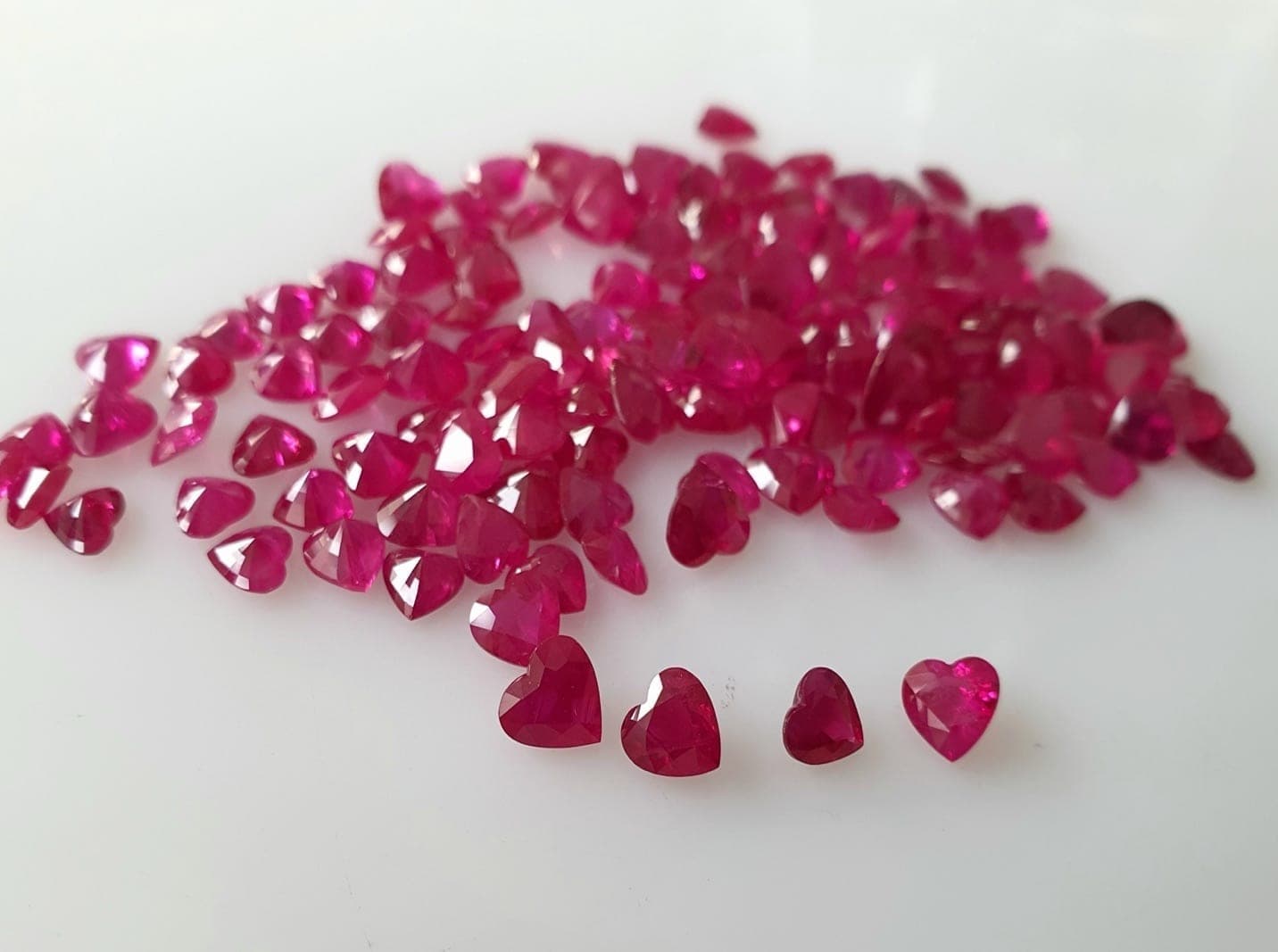
For manufacturers, calibrated rubies that drop into standard settings without rework are essential — inconsistent sizing creates production delays and labor cost. Confirm the calibration tolerance (we cut to ±0.1mm), the shapes and sizes you need, and the minimum order quantities before committing. For pricing expectations across quality tiers, see the ruby price per carat guide.
A B2B Ruby Buying Checklist
- Define your color target (hue, saturation, tone) and require lot-wide consistency.
- Judge clarity as a Type II stone, face-up — prioritize color over clarity except for large top-tier stones.
- Get treatment disclosure in writing; verify unheated/high-value with a report.
- Treat origin as an opinion; pay premiums only on definitive reports.
- Screen for synthetics or buy from a supplier who does.
- Lock calibration, sizes, MOQ, and certification level before ordering.
When you are ready, browse our wholesale rubies or contact us with your specification.